Navigating the complex and rapidly evolving cybersecurity landscape requires a solid foundational understanding, and the EC-Council Ethical Hacking Essentials (EHE) certification offers an excellent starting point. Aspiring cybersecurity professionals frequently seek reliable 112-52 exam questions to gauge their readiness for this crucial entry-level credential. This comprehensive guide delves into the EC-Council 112-52 exam, providing essential insights for anyone looking to embark on their ethical hacking journey.
Understanding the exam’s structure, content, and preparation methodologies is vital for effective study and achieving certification success. The EHE program is specifically designed to equip individuals with the core skills needed to identify basic cyber threats and implement initial mitigation strategies. This makes the 112-52 certification a significant milestone for those beginning their careers in information security.
Unlocking the EC-Council 112-52 EHE Certification
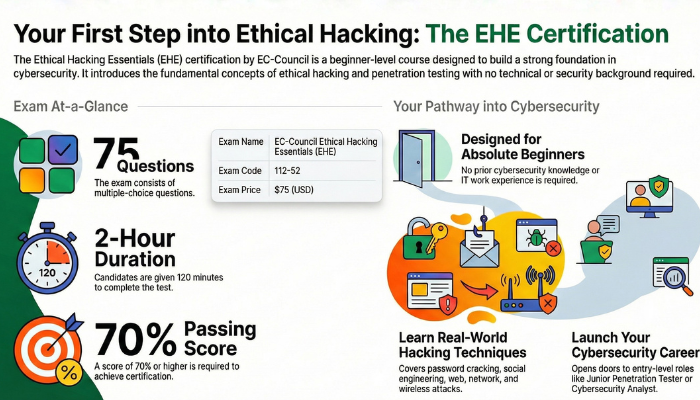
The EC-Council Ethical Hacking Essentials (EHE) certification, identified by its unique exam code 112-52, is a globally recognized credential that validates a candidate’s fundamental understanding of information security and ethical hacking concepts. This certification is specifically tailored for individuals with little to no prior cybersecurity experience, positioning it as an ideal entry-level ethical hacking certification.
The EHE program focuses on providing practical knowledge crucial for anyone entering the cybersecurity field, covering everything from basic security principles to common attack techniques and defensive measures. Obtaining this certification demonstrates a foundational grasp of ethical hacking principles and a commitment to professional development within the cybersecurity domain.
Key Details for the 112-52 EHE Exam
Effective preparation for any certification begins with a clear understanding of its administrative and structural details. Candidates pursuing the EC-Council EHE practice exam experience must first familiarize themselves with the specifics of the 112-52 test. These critical details are instrumental in planning study schedules and allocating resources efficiently.
- Exam Name: EC-Council Ethical Hacking Essentials (EHE)
- Exam Code: 112-52
- Exam Price: The cost to take the exam is $299 (USD).
- Duration: Candidates are allotted 120 minutes (2 hours) to complete the examination.
- Number of Questions: The exam consists of 75 multiple-choice questions designed to assess a broad range of topics.
- Passing Score: A minimum score of 70% is required to successfully pass the certification exam.
Exploring the Ethical Hacking Essentials Syllabus (112-52)
The Ethical Hacking Essentials syllabus 112-52 is meticulously designed to cover a broad spectrum of foundational cybersecurity topics, ensuring candidates build a comprehensive understanding from the ground up. Each module focuses on a critical area of information security and ethical hacking, preparing individuals for real-world challenges. Thoroughly reviewing these domains is essential for effective preparation and success on the exam.
✔️ Information Security Fundamentals:
This module introduces the core concepts and principles of information security, laying the groundwork for understanding cyber threats and defenses. It covers essential topics like confidentiality, integrity, availability, and risk management, which form the pillars of secure systems.
✔️ Ethical Hacking Fundamentals:
Candidates learn the basic principles, methodologies, and legal aspects surrounding ethical hacking. This section clearly differentiates ethical hacking from malicious activities and establishes the importance of proper authorization, scope definition, and adherence to ethical guidelines.
✔️ Information Security Threats and Vulnerability Assessment:
This critical area focuses on identifying common information security threats, understanding various attack vectors, and performing basic vulnerability assessments. It teaches how to systematically spot weaknesses in systems and applications before malicious attackers can exploit them.
✔️ Password Cracking Techniques and Countermeasures:
Learners explore different methods used by attackers to crack passwords, such as brute force, dictionary attacks, and rainbow tables. Crucially, it also covers robust countermeasures to protect sensitive credentials, including strong password policies, multi-factor authentication, and secure storage practices.
✔️ Social Engineering Techniques and Countermeasures:
This section delves into the psychological manipulation tactics used by attackers to trick individuals into divulging confidential information or performing actions they shouldn’t. Effective countermeasures against phishing, pretexting, baiting, and other social engineering attacks are also covered, emphasizing user education and awareness.
✔️ Network Level Attacks and Countermeasures:
Understanding threats at the network layer is vital in cybersecurity. This module covers common network-based attacks, including sniffing, denial-of-service (DoS), and man-in-the-middle attacks, along with their respective defense mechanisms and secure network configurations like firewalls and intrusion detection systems.
✔️ Web Application Attacks and Countermeasures:
With the prevalence of web applications, securing them is paramount. This module introduces various web application exploits like SQL injection, cross-site scripting (XSS), and broken authentication, and outlines strategies for prevention and mitigation, such as secure coding practices and web application firewalls.
✔️ Wireless Attacks and Countermeasures:
Wireless networks present unique security challenges due to their broadcast nature. This section educates candidates on common wireless attack vectors, such as rogue access points, WEP/WPA/WPA2 cracking, and evil twin attacks, detailing appropriate security measures to protect wireless infrastructures.
✔️ Mobile Attacks and Countermeasures:
As mobile devices become integral to daily life and business, securing them is crucial. This module addresses specific threats to mobile platforms, including insecure apps, device vulnerabilities, and data leakage, providing insights into mobile security best practices and mobile device management.
✔️ IOT & OT Attacks and Countermeasures:
The rapidly expanding landscapes of Internet of Things (IoT) and Operational Technology (OT) introduce new attack surfaces and unique vulnerabilities. This section explores threats specific to these interconnected systems and discusses strategies for securing smart devices, industrial control systems, and critical infrastructure.
✔️ Cloud Computing Threats and Countermeasures:
Cloud adoption brings significant benefits but also new security concerns. This module covers common cloud-based threats, misconfigurations, and shared responsibility models, emphasizing best practices for securing data and applications in various cloud environments, including IaaS, PaaS, and SaaS.
✔️ Penetration Testing Fundamentals:
This module provides an introduction to the overall process of penetration testing, from planning and reconnaissance to exploitation, post-exploitation, and reporting. It offers a foundational understanding of how ethical hackers systematically identify and exploit vulnerabilities to improve an organization’s security posture.
Why Pursue the 112-52 Exam?
1. Gain a Globally Recognized Cybersecurity Foundation
- The EHE certification provides a strong, internationally respected knowledge base.
- Employers worldwide recognize EC-Council credentials, boosting your professional credibility.
2. Build the Essential Skills Needed for Ethical Hacking
- Learn core concepts of ethical hacking and cybersecurity threats.
- Understand attacker tactics, techniques, and methodologies.
- Develop practical skills useful in real-world security environments.
3. Create a Pathway to Advanced EC-Council Certifications
- EHE acts as the ideal starting point for higher-level programs like CEH (Certified Ethical Hacker).
- It ensures you have the foundational knowledge required for more specialized training.
4. Strengthen Your Cybersecurity Career Opportunities
- This certification enhances your resume and helps you stand out in a competitive field.
- Opens doors to entry-level roles such as:
- Security Analyst
- Junior Penetration Tester
- Cybersecurity Intern
- IT Security Auditor
5. Demonstrate Commitment to Professional Growth
- EHE certification shows employers you are serious about developing in the cybersecurity field.
- Displays initiative and dedication—qualities valued by hiring managers.
6. Build Confidence as You Enter a High-Demand Industry
- Provides structured learning that helps beginners feel prepared.
- Offers a clear roadmap toward long-term cybersecurity career success.
7. Access Official EC-Council Training Resources
- The EC-Council program page provides up-to-date details about study paths, benefits, and career outcomes.
- Ideal for exploring next steps in your cybersecurity journey.
Effective 112-52 Exam Preparation Strategies
1. Start With the Official EC-Council Curriculum
- Review the complete syllabus and understand the weightage of each domain.
- Identify high-priority and challenging areas early in your preparation.
2. Create a Structured & Realistic Study Schedule
- Allocate dedicated hours to each topic based on difficulty level.
- Break large concepts into manageable study blocks.
- Stay consistent to ensure a balanced preparation.
3. Actively Engage With the Study Material
- Take detailed notes while studying.
- Summarize difficult sections in your own words.
- Discuss concepts with peers or study partners for deeper understanding.
4. Use High-Quality 112-52 Mock Tests & Practice Questions
- Attempt EC-Council EHE practice exams regularly.
- Analyze your mock test performance to identify weak areas.
- Improve time management by simulating real exam conditions.
5. Identify & Address Knowledge Gaps
- Review incorrect answers from mock tests.
- Revisit weak topics and reinforce them with additional reading or video tutorials.
- Track your progress to ensure consistent improvement.
6. Avoid EC-Council EHE Exam Dumps at All Costs
- Exam dumps are often outdated, inaccurate, or obtained unethically.
- Using them gives a false sense of readiness and risks certification failure.
- They can damage your professional credibility.
7. Use Only Trusted & Ethical Resources
- Rely on official study guides, reputable providers, and verified practice exams.
- Platforms like Edusum offer reliable, up-to-date, and ethical preparation material.
8. Study Official-Style Sample Q&A Sets
- Review sample questions to understand exam phrasing and structure.
- Learn how detailed your answers need to be.
- Familiarize yourself with the types of concepts that frequently appear.
Understanding the 112-52 Exam Question Format
1. Expect Multiple-Choice Questions Designed for Real-World Thinking
- The exam consists primarily of multiple-choice questions.
- Many questions are scenario-based, requiring analytical and critical thinking skills.
- These scenarios simulate real ethical hacking situations you may encounter professionally.
2. Understand the Structure of Each Question
- Most questions present a definition, cybersecurity issue, or conceptual challenge.
- You must choose the best answer from several plausible options.
- Success depends on true understanding—not memorization.
3. Focus on Why Answers Are Right or Wrong
- Analyze the reasoning behind correct answers.
- Equally important: identify why incorrect options do not fit the scenario.
- This helps sharpen decision-making for similar questions in the real exam.
4. Strengthen Your Skills With Scenario-Based Practice
- Scenario questions test your ability to apply theory to real-world problems.
- Practicing these improves your thinking speed and accuracy.
- Look for practice sets that mimic the official 112-52 exam style.
5. Explore Multiple Perspectives Through Industry Insights
- Professionals online share practical knowledge, case studies, and demonstrations.
- These real-world examples reinforce theoretical concepts.
- They also help you understand how ethical hacking works in practice—not just on paper.
6. Use EC-Council’s YouTube Channel for Extra Learning
- These resources complement your formal training and deepen your understanding.
- EC-Council’s official videos include tutorials, discussions, and success stories.
- Visual learning aids help you retain concepts more effectively.
Financial Considerations: EC-Council EHE Certification Cost
1. Know the Official Exam Fee
- The EC-Council 112-52 exam costs $299 USD.
- This fee covers only the examination itself.
- The pricing reflects the global value, credibility, and industry recognition of the EHE certification.
2. Plan for Additional Preparation Expenses
- Budget for supplemental items such as:
- Study guides
- Official training courses
- Authorized practice exams
- Mock tests and lab resources
- These tools can enhance your preparation and improve your chances of success.
3. Be Cautious With “Free” Study Materials
- Some sources may offer 112-52 study material for free, but they are often incomplete or unreliable.
- Official EC-Council courseware is typically more accurate, updated, and aligned with the real exam.
- Investing in verified materials ensures deeper learning and ethical preparation.
4. Check the Official EC-Council Website for Accurate Updates
- Always refer to the official EC-Council website for:
- The latest exam pricing
- Registration guidelines
- Current training bundles or promotions
- Policy updates or program changes
- This ensures you have the most up-to-date, trustworthy information.
Frequently Asked Questions
Q1. What is EC-Council 112-52 Exam?
The EC-Council 112-52 EHE (Ethical Hacking Essentials) exam is an entry-level certification designed to validate foundational knowledge in cybersecurity and ethical hacking principles. It covers key areas such as information security fundamentals, various cyber threats, vulnerability assessments, and basic countermeasures. This certification serves as a stepping stone for individuals aspiring to build a career in information security, providing them with essential skills to understand and combat common cyberattacks.
Q2. Who should pursue the 112-52 Exam?
The EC-Council EHE certification is ideal for beginners, students, IT professionals looking to transition into cybersecurity, and anyone interested in understanding the basics of ethical hacking and information security. It provides a solid entry point for those with little to no prior experience, establishing a crucial baseline of knowledge recognized across the industry.
Q3. How long does it typically take to prepare for the 112-52 exam?
Preparation time for the 112-52 exam can vary greatly depending on an individual’s existing knowledge and study habits. Generally, candidates with some IT background might need 2-4 weeks of focused study, while complete beginners might require 1-2 months or more. Consistent study, reviewing all syllabus topics, and practicing with mock tests are key to effective preparation within this timeframe.
Q4. Are there official practice tests available for the 112-52 exam?
EC-Council generally recommends official training and courseware for preparation, which may include practice questions. While fully “official” practice tests directly from EC-Council might be integrated into their learning platforms, reputable third-party platforms like Edusum offer high-quality practice tests and mock exams designed to simulate the actual 112-52 exam environment and question styles, which are invaluable for preparation.
Q5. What career opportunities can the 112-52 Exam unlock?
The EHE certification serves as a valuable credential for entry-level roles in cybersecurity. It can open doors to positions such as Security Analyst, Junior Penetration Tester, Cybersecurity Intern, or IT Security Auditor. It demonstrates a foundational understanding that is highly sought after by employers, providing a strong starting point for a career in information security and paving the way for more advanced certifications.
Conclusion
The EC-Council 112-52 Ethical Hacking Essentials certification is an invaluable asset for anyone starting a career in cybersecurity. It establishes a strong foundation in crucial security concepts and practical ethical hacking techniques, preparing individuals for the challenges of the digital world. By thoroughly understanding the exam details, mastering the comprehensive syllabus, and diligently utilizing ethical study practices, candidates can confidently approach the 112-52 exam and achieve success.
This certification not only validates foundational knowledge but also opens doors to exciting opportunities in the ever-growing field of information security. Dedicated preparation and a commitment to continuous learning are the ultimate keys to unlocking this foundational credential and building a thriving career in cybersecurity.
Ready to begin your journey toward becoming an Ethical Hacking Essentials professional? Empower your preparation with reliable resources and structured guidance. Visit our comprehensive guide to EC-Council Ethical Hacking Essentials certification success and start building your expertise today.


