
The Dell Technologies Data Science Optimize (D-AA-OP-23) certification rigorously validates an individual’s expertise in optimizing data science solutions within modern enterprise environments. This professional credential is specifically designed for data scientists, machine learning engineers, and analytics professionals aiming to refine their skills in advanced analytics and big data technologies. Achieving this certification demonstrates a profound understanding of methodologies and tools essential for transforming raw data into actionable insights at scale.
This comprehensive article outlines the certification’s critical value, details the D-AA-OP-23 exam structure, elucidates the comprehensive syllabus, and provides a strategic roadmap for effective preparation, guiding candidates towards future-proofing their data science careers.
Examining the Dell Technologies Data Science Optimize Credential
Pursuing the Dell Technologies Data Science Optimize certification signifies a commitment to excellence in the rapidly evolving field of data science. This credential distinguishes professionals who can effectively leverage Dell’s ecosystem to build, deploy, and manage sophisticated analytical models. It reinforces practical capabilities in areas like big data processing, natural language processing, and social network analysis, which are crucial for driving business innovation.
Obtaining this certification offers several compelling advantages, enhancing both individual career trajectories and organizational capabilities. Professionals gain validated recognition from Dell Technologies, a leader in enterprise technology, which often translates into increased career opportunities and earning potential. Furthermore, it ensures practitioners are equipped with the most relevant and in-demand skills, fostering innovation and operational efficiency within their roles. Exploring broader Dell EMC certifications can also reveal complementary pathways for holistic skill development.
Delineating D-AA-OP-23 Exam Specifics
Understanding the exact parameters of the D-AA-OP-23 exam is the first strategic step toward successful certification. The Dell Data Science Optimize exam is structured to thoroughly assess a candidate’s practical and theoretical knowledge across key data science domains. Candidates should be fully informed about the exam’s format and administrative details to plan their study effectively.
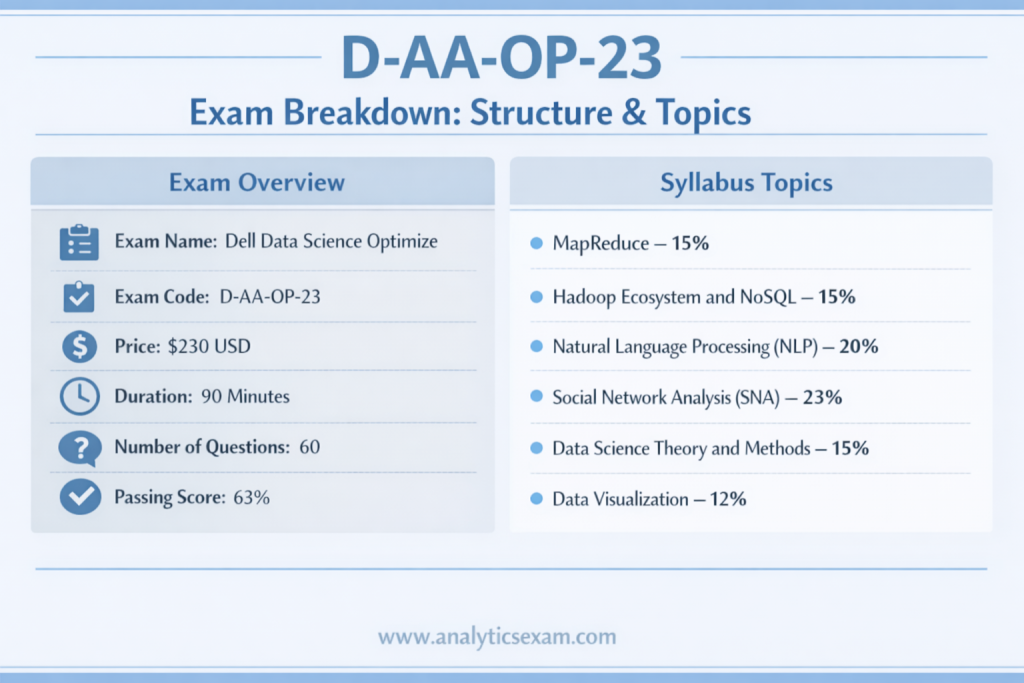
Key details for the D-AA-OP-23 exam include:
The Dell Data Science Optimize (D-AA-OP-23) exam costs $230 and lasts 90 minutes. It includes 60 multiple-choice questions, and candidates must score at least 63% to pass and earn the certification.
These specifications highlight the need for focused preparation and efficient time management during the exam. Dell provides further context on its full range of credentials via its certification overview, offering insights into available exams and their structures.
Mapping the Dell Technologies Data Science Optimize Syllabus
The D-AA-OP-23 certification syllabus is meticulously designed to cover a broad spectrum of advanced data science concepts and tools. A deep understanding of each domain, along with its respective weightage, is essential for a targeted study approach. Candidates should review the detailed syllabus outline to align their preparation with the exam’s objectives.
The primary topics and their approximate weightages include:
- MapReduce (15%): This section focuses on the foundational programming model for processing large datasets with a parallel, distributed algorithm on a cluster. It covers concepts like data flow, fault tolerance, and practical implementation in big data ecosystems.
- Hadoop Ecosystem and NoSQL (15%): Examines the components of the Hadoop ecosystem beyond MapReduce, such as HDFS, YARN, Hive, and Pig. It also delves into NoSQL databases (e.g., Cassandra, MongoDB), their data models, and use cases in scalable data management.
- Natural Language Processing (NLP) (20%): Covers techniques for enabling computers to understand, interpret, and generate human language. Topics include text preprocessing, feature extraction, sentiment analysis, named entity recognition, and common NLP algorithms.
- Social Network Analysis (SNA) (23%): Focuses on the study of social structures using networks and graph theory. It involves analyzing relationships and flows between entities, covering metrics like centrality, connectivity, community detection, and influence maximization. This represents the largest weighted section of the exam.
- Data Science Theory and Methods (15%): Encompasses the core principles of data science, including statistical inference, hypothesis testing, regression analysis, classification, clustering, and model evaluation metrics. It also touches upon machine learning fundamentals and ethical considerations in data analysis.
- Data Visualization (12%): Explores methods and tools for visually representing data and insights. This includes choosing appropriate chart types, creating interactive dashboards, storytelling with data, and principles of effective visual communication to convey complex information clearly.
Mastering these areas ensures candidates are well-versed in the comprehensive Dell Technologies Data Science Optimize exam syllabus, covering essential D-AA-OP-23 certification topics and Dell Data Science Optimize exam objectives.
Crafting Your Learning Strategy for D-AA-OP-23
A well-structured learning strategy is pivotal for navigating the breadth of topics covered in the D-AA-OP-23 exam. Effective preparation goes beyond mere memorization; it requires a systematic approach to understanding complex concepts and their practical applications. Begin by creating a personalized study plan that allocates sufficient time to each syllabus domain, prioritizing areas with higher weightage or those where your current knowledge may be weaker.
Consider leveraging a variety of resources to deepen your understanding:
- Official Documentation: Dell Technologies typically provides extensive documentation, whitepapers, and guides related to their data science platforms and best practices. These are invaluable for gaining vendor-specific insights.
- Online Courses and Workshops: Enroll in specialized courses covering big data technologies, advanced analytics, NLP, and SNA. Platforms like Coursera, edX, or dedicated training providers offer structured learning paths.
- Hands-on Practice: Theoretical knowledge must be complemented with practical experience. Work on real-world projects or simulated scenarios involving MapReduce, Hadoop, NoSQL databases, and analytical tools. This reinforces concepts and builds confidence.
- Community Engagement: Participate in Dell community discussions and data science forums. Engaging with peers and experts can provide alternative perspectives, clarification on challenging topics, and insights into common challenges and solutions.
This holistic approach forms a robust Dell Technologies Data Science Optimize study guide, vital for how to prepare for Dell Technologies Data Science Optimize certification.
Strengthening Core Data Science Capabilities
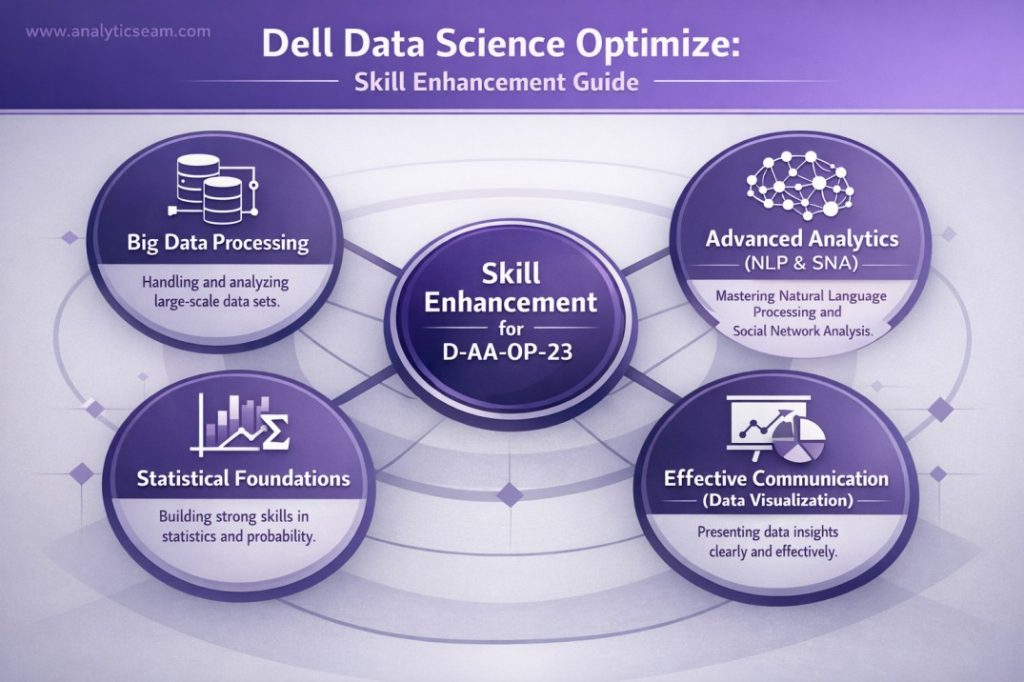
The D-AA-OP-23 certification is not just about passing an exam; it’s about solidifying the core capabilities that define a proficient data scientist. Each syllabus topic directly correlates to critical skills demanded in today’s analytical roles. By focusing on skill development rather than rote learning, candidates can truly elevate their expertise and enhance their Dell Data Science Optimize career path.
- Big Data Processing: Developing strong skills in MapReduce and the Hadoop ecosystem means mastering distributed computing paradigms. This allows professionals to handle vast datasets efficiently, a cornerstone of modern data analytics.
- Advanced Analytics: Proficiency in Natural Language Processing (NLP) and Social Network Analysis (SNA) equips data scientists with tools to extract insights from unstructured text and complex relational data. These skills are highly valued in diverse industries, from marketing intelligence to cybersecurity.
- Statistical and Machine Learning Foundations: A solid grasp of Data Science Theory and Methods ensures models are statistically sound, interpretable, and appropriate for the problem at hand. This includes understanding the nuances of various algorithms and their performance metrics.
- Effective Communication: Data Visualization skills enable data scientists to translate complex analytical findings into clear, compelling narratives for stakeholders, bridging the gap between technical output and business decision-making.
These capabilities contribute to a deeper understanding of the broader Dell Technologies ecosystem and how data science solutions integrate within enterprise infrastructures.
Mastering D-AA-OP-23 Exam Preparation Techniques
Beyond theoretical study, mastering specific exam preparation techniques is crucial for success in the Dell Technologies Data Science Optimize exam. Effective strategies minimize test anxiety and optimize performance on the day of the examination. Candidates should integrate practice, review, and self-assessment into their routine.
- Practice Exam Questions: Regularly engage with D-AA-OP-23 practice exam questions. This helps in understanding the exam format, question types, and identifying areas requiring further study. Leveraging quality practice tests, such as those available on AnalyticsExam, can significantly improve readiness.
- Time Management: The 90-minute duration for 60 questions means approximately 1.5 minutes per question. Practice answering questions under timed conditions to improve speed and accuracy.
- Review and Refine: After attempting practice tests, thoroughly review incorrect answers. Understand the rationale behind the correct solution and revisit the corresponding syllabus topics. Identify patterns in your mistakes to target specific knowledge gaps.
- Simulate Exam Conditions: Whenever possible, take full-length mock exams in an environment that mimics the actual testing conditions. This helps in building stamina and familiarity with the pressure of the real exam.
- Ethical Preparation: Always opt for legitimate study materials and practice tests. Engaging with “dumps” or unauthorized materials undermines the integrity of the certification and the value of your achievement. Dell Technologies, like all reputable vendors, maintains strict policies against such practices.
These Dell Data Science Optimize exam preparation tips and best resources for Dell Technologies Data Science Optimize are instrumental for confident testing.
Accelerating Career Growth with Dell Certification
The D-AA-OP-23 certification serves as a powerful accelerator for career growth within the data science domain. It provides tangible evidence of advanced skills in data optimization and analytics, positioning certified professionals for leadership roles and more complex projects. Organizations increasingly seek certified talent to ensure their data initiatives are led by individuals with proven expertise, making the official exam page a critical resource for validation.
The demand for skilled data scientists who can navigate big data challenges and leverage sophisticated analytical techniques is consistently high. This certification validates precisely these capabilities, offering significant competitive advantages. It demonstrates a commitment to professional development and an alignment with industry best practices, making a strong case for why get Dell Technologies Data Science Optimize certified. Furthermore, staying updated with advancements through resources like the Dell Technologies’ official YouTube channel can provide continuous learning opportunities post-certification.
Realizing Long-Term Strategic Value
Beyond immediate career benefits, the Dell Data Science Optimize certification delivers long-term strategic value to both individuals and their employers. It fosters a workforce capable of driving innovation through data, optimizing business processes, and enabling informed decision-making. As data volumes continue to grow and analytical challenges become more intricate, professionals with validated skills in optimizing data science solutions become indispensable assets.
This credential not only enhances a data scientist’s technical prowess but also their strategic thinking, allowing them to contribute more meaningfully to organizational goals. It positions individuals as leaders in the adoption and application of advanced analytics, ensuring they remain at the forefront of technological advancements and future-proof their expertise against evolving industry demands.
Conclusion
The Dell Technologies Data Science Optimize (D-AA-OP-23) certification is an invaluable investment for any data professional seeking to advance their career and deepen their expertise. By mastering the comprehensive syllabus and employing strategic preparation techniques, candidates can confidently achieve this credential, unlocking new opportunities and solidifying their role in the data-driven future.
Embark on your certification journey today to optimize your skills and launch a successful career in advanced data science. Register for the exam and begin your preparation to become a certified expert in Dell Technologies data optimization.
Frequently Asked Questions
1. What does the D-AA-OP-23 certification validate?
The Dell Technologies Data Science Optimize (D-AA-OP-23) certification validates an individual’s expertise in designing, implementing, and optimizing data science solutions using Dell Technologies’ approaches to big data and advanced analytics. It covers key areas such as MapReduce, Hadoop, NoSQL, NLP, SNA, and data visualization.
2. Who should pursue the Dell Data Science Optimize certification?
This certification is ideal for data scientists, machine learning engineers, data analysts, and IT professionals who work with large datasets and advanced analytical models, particularly those leveraging Dell Technologies infrastructure or seeking to enhance their skills in enterprise-grade data science optimization.
3. How much does the D-AA-OP-23 exam cost?
The D-AA-OP-23 Dell Data Science Optimize exam costs $230 (USD). This price may vary slightly based on region or any applicable taxes, so it’s always best to confirm on the official Dell Technologies certification page.
4. What are the key domains covered in the D-AA-OP-23 syllabus?
The D-AA-OP-23 syllabus covers critical domains including MapReduce, Hadoop Ecosystem and NoSQL, Natural Language Processing (NLP), Social Network Analysis (SNA), Data Science Theory and Methods, and Data Visualization, each with specific weightage.
5. What are the best ways to prepare for the Dell Technologies Data Science Optimize exam?
Effective preparation involves reviewing the official syllabus, utilizing Dell’s documentation, engaging in hands-on practice with big data tools, participating in online courses, and regularly attempting practice exam questions to assess readiness and identify knowledge gaps.


