The AD0-L800 Certification, officially known as the Adobe Captivate Certified Professional exam, validates a candidate’s proficiency in creating interactive e-learning content using Adobe Captivate. This credential is designed for professionals who develop, design, and manage digital learning experiences, demonstrating their ability to leverage Captivate’s comprehensive features for simulations, assessments, and multimedia integration. Individuals aspiring to elevate their e-learning development skills and gain industry recognition will find this certification particularly beneficial. This article provides an in-depth exploration of the AD0-L800 exam, offering strategic insights into its structure, syllabus, effective preparation methodologies, and the tangible career advantages it offers.
Validating Skills with Adobe Captivate Certification
Achieving the Adobe Captivate Certified Professional credential signifies a high level of expertise in modern e-learning content creation. This certification validates a professional’s ability to design and deliver effective learning modules. It supports diverse educational and corporate training needs. Certified professionals create interactive content, simulations, and assessments with Adobe Captivate. The certification sets them apart in a competitive market and shows commitment to professional growth.. Such validation is critical for those looking to solidify their standing in instructional design and e-learning development.
The credential highlights a professional’s deep understanding of how to translate complex information into accessible and interactive learning paths, directly impacting learner engagement and knowledge retention. It underscores a versatile skill set that is highly valued across various industries, from corporate training departments to educational institutions and independent content development agencies. For a broader view of Adobe’s offerings, exploring the Adobe certification landscape can provide additional context on how this credential fits within the larger ecosystem of Adobe professional development. The AD0-L800 certification thus serves not merely as a title but as a testament to practical, applied proficiency.
Evaluating the AD0-L800 Exam Blueprint
Understanding the foundational specifics of the AD0-L800 examination is crucial for effective preparation. The Adobe Captivate Certified Professional exam is meticulously structured to assess a candidate’s technical skills and conceptual knowledge. This information clarifies the exam’s administrative details and expectations. It helps test-takers plan their study schedule more effectively. Understanding these parameters also reduces pre-exam anxiety. Candidates can then focus on mastering the content instead of worrying about the exam format.
The core details of the AD0-L800 exam include:
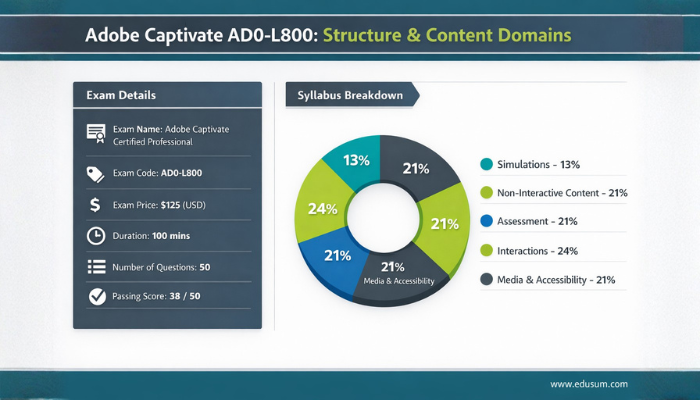
- Exam Name: Adobe Captivate Certified Professional
- Exam Code: AD0-L800
- Exam Price: $125 (USD)
- Duration: 100 minutes
- Number of Questions: 50 multiple-choice questions
- Passing Score: Candidates must correctly answer 38 out of 50 questions to pass.
These parameters define the scope and intensity of the assessment. Candidates should allocate their study time proportionally to ensure comprehensive coverage and practice under timed conditions to simulate the actual exam environment. The clear passing score offers a definitive target, motivating focused effort on areas requiring improvement. For the most current information, candidates should always refer to the official Adobe certification page.
Dissecting the AD0-L800 Syllabus Domains
A thorough understanding of the AD0-L800 exam syllabus is paramount for any aspiring Adobe Captivate Certified Professional. The syllabus is meticulously divided into several key domains, each carrying a specific weightage that indicates its relative importance in the overall examination. This structure helps candidates prioritize their study efforts, focusing more intensely on areas that constitute a larger percentage of the exam questions. By breaking down the content, individuals can identify their strengths and weaknesses, tailoring their study plan for maximum efficiency and impact.
The AD0-L800 exam assesses proficiency across the following domains:
- Simulations (13%): Covers creating various types of simulations, including software demonstrations, training, and assessment simulations, along with their publishing options.
- Non-Interactive Content (21%): Focuses on developing static content, adding audio and video, and setting up slide properties and project templates.
- Assessment (21%): Emphasizes designing quizzes, question pools, result slides, and integrating learning management system (LMS) reporting.
- Interactions (24%): Deals with advanced actions, variables, widgets, buttons, and other interactive elements to enhance learner engagement.
- Media and Accessibility (21%): Includes working with images, animations, themes, and ensuring content compliance with accessibility standards.
Each domain represents a critical aspect of using Adobe Captivate effectively, from foundational content creation to advanced interactive design and accessibility considerations. A balanced study approach, giving due attention to the weighted percentages, is key to success. For a comprehensive breakdown of topics within these domains, refer to the detailed exam syllabus insights provided by Edusum.
Implementing Effective AD0-L800 Preparation Strategies
Successful preparation for the AD0-L800 exam goes beyond merely reviewing content; it requires a structured, multi-faceted approach. Developing a robust study plan is the cornerstone of passing the Adobe Captivate Certified Professional examination. This involves more than just reading through manuals; it encompasses hands-on practice, strategic review, and consistent self-assessment to identify and address knowledge gaps. A well-executed strategy minimizes surprises on exam day and builds confidence in your abilities.
Key components of an effective preparation strategy include:
- Structured Study Schedule: Allocate specific time slots for each syllabus domain, ensuring that higher-weighted sections receive proportionate attention. Consistency is more crucial than cramming.
- Hands-on Practice: Adobe Captivate is a practical tool. Regularly apply theoretical knowledge by creating projects, simulations, and assessments within the software. Experiment with different features and scenarios.
- Utilize Official Documentation: Refer to Adobe’s official Captivate documentation, user guides, and tutorials. These resources provide accurate and detailed explanations of features and functionalities.
- Engage with Communities: Participate in Adobe Captivate forums, online communities, or study groups. Discussing complex topics and sharing insights with peers can clarify doubts and offer alternative perspectives.
- Review and Revise: Periodically revisit previously studied topics to reinforce learning. Create concise notes or flashcards for quick revision of key concepts and shortcuts.
Adhering to these strategies will not only prepare you for the technical questions but also foster a deeper understanding of Captivate’s capabilities, essential for real-world application.
Mastering Practical Application
The theoretical knowledge gained from studying the syllabus is best cemented through practical application. Adobe Captivate is a dynamic tool, and proficiency often comes from experience with its interface and functionalities. Candidates should focus on scenarios that simulate real-world e-learning challenges, such as creating complex branching scenarios, integrating various media types seamlessly, and designing interactive quizzes with diverse question formats. This hands-on engagement helps in understanding the nuances of the software and how different features interact. Regularly practicing the creation of projects that align with each syllabus domain will significantly enhance skill retention and problem-solving capabilities under exam conditions. This iterative process of learning and doing is vital for solidifying expertise in Captivate.
Selecting Optimal Resources for AD0-L800 Mastery
Choosing the right study materials is a critical determinant of success for the AD0-L800 certification exam. With a plethora of resources available, candidates must discern between high-quality content that aligns with the official syllabus and less reliable alternatives. Focusing on official and reputable sources ensures that the information being absorbed is accurate, relevant, and comprehensive, directly contributing to a stronger foundation for the Adobe Captivate Certified Professional assessment. The judicious selection of study aids can streamline the learning process, making it more efficient and targeted.
Consider incorporating the following types of resources into your study regimen:
- Official Adobe Learning Resources: Adobe often provides online courses, webinars, and documentation that are directly relevant to their certifications. These materials are authoritative and reflect the most up-to-date features of Captivate.
- Certification Study Guides: Look for study guides specifically tailored to the AD0-L800 exam. These often condense key information and provide structured learning paths that align with the syllabus domains.
- Practice Questions and Exams: Engaging with high-quality practice questions is indispensable. Platforms like Edusum offer resources that help familiarize candidates with the question format, difficulty level, and time management required for the actual exam. These are excellent for self-assessment.
- Video Tutorials and Online Courses: Visual learners can benefit immensely from video-based learning platforms that offer step-by-step guides on Adobe Captivate functionalities. Many platforms provide comprehensive courses that cover the entire syllabus.
It is imperative to avoid “exam dumps” or unauthorized materials that promise shortcuts, as these can lead to a superficial understanding and potentially unethical practices. Ethical preparation, focusing on genuine comprehension, is always the most sustainable path to certification and true professional skill.
Assessing AD0-L800 Exam Difficulty and Readiness
Understanding the perceived difficulty of the AD0-L800 exam is a common concern for many candidates. While individual experiences vary, the Adobe Captivate Certified Professional exam generally requires a solid blend of theoretical knowledge and practical application. It’s not merely about memorization but about demonstrating the ability to use Captivate features effectively in diverse e-learning scenarios. Readiness, therefore, isn’t solely about completing a study guide but about achieving a comfort level with the software’s intricacies and conceptual underpinnings.
Factors influencing exam difficulty include:
- Prior Experience: Candidates with extensive hands-on experience using Adobe Captivate in real-world projects often find the exam less challenging than those with limited practical exposure.
- Conceptual Depth: The exam tests not just *how* to use a feature but *when* and *why*. Understanding the best practices for e-learning design and implementation within Captivate is crucial.
- Time Management: With 50 questions in 100 minutes, effective time management during the exam is vital. Practice with timed mock tests can significantly improve performance.
A rigorous review of the official syllabus combined with consistent, project-based practice will build the confidence needed to tackle the exam effectively. Self-assessment through practice questions helps to gauge current readiness and pinpoint areas needing further attention, transforming perceived difficulty into manageable challenges.
Charting Your Career with Adobe Captivate Certification
Earning the Adobe Captivate Certified Professional certification can significantly influence an individual’s career trajectory, opening doors to new opportunities and enhancing professional standing. This credential serves as a clear indicator to employers that the certified individual possesses validated expertise in a highly sought-after skill set within the e-learning and instructional design fields. Beyond simply demonstrating technical capability, it signifies a commitment to professional growth and adherence to industry best practices in content development.
The benefits for career advancement are manifold:
- Enhanced Employability: Certified professionals often stand out in job applications, increasing their chances of securing roles such as Instructional Designer, E-learning Developer, or Multimedia Specialist.
- Increased Earning Potential: Validation of specialized skills can lead to higher salary expectations and better negotiation power in the job market.
- Professional Credibility: The certification confers a level of authority and trust, making certified individuals preferred choices for complex e-learning projects and leadership roles.
- Expanded Skill Set: The preparation process itself broadens understanding of Captivate’s full capabilities, leading to more versatile and innovative project contributions.
- Networking Opportunities: Being part of a certified professional community can lead to valuable connections and knowledge sharing within the industry.
This certification is more than a line on a resume; it’s an investment in a dynamic and evolving career path.
Extending Expertise: Beyond the AD0-L800 Credential
Achieving the AD0-L800 certification marks a significant milestone, but true professional growth involves continuous learning and adaptation. The world of e-learning development, like technology itself, is constantly evolving, with new tools, methodologies, and best practices emerging regularly. For an Adobe Captivate Certified Professional, sustaining and extending expertise means staying abreast of these developments and actively seeking opportunities to deepen skills and broaden their impact. This forward-looking approach ensures that the initial investment in certification continues to yield long-term career dividends.
Ways to extend your expertise post-certification include:
- Exploring Advanced Captivate Features: While the exam covers core functionalities, Captivate offers many advanced features for niche requirements. Delving into these can unlock new creative possibilities.
- Mastering Related Technologies: E-learning development often intersects with graphic design, video editing, and project management tools. Acquiring skills in adjacent software can create a more holistic profile.
- Contributing to the Community: Sharing knowledge through blogs, webinars, or mentoring can reinforce understanding and establish thought leadership.
- Seeking Diverse Projects: Working on a variety of e-learning projects with different requirements and target audiences can push creative boundaries and enhance problem-solving skills.
- Pursuing Further Certifications: Adobe offers a range of certifications. Exploring other additional Adobe training resources can lead to specialization in related areas, building upon the foundation established by the AD0-L800.
This continuous pursuit of knowledge and practical application ensures that your Adobe Captivate Certified Professional status remains relevant and impactful throughout your career.
The journey to becoming an Adobe Captivate Certified Professional through the AD0-L800 exam is a rigorous yet rewarding endeavor. This certification validates key skills in e-learning content development. It also supports career growth and industry recognition. By understanding the exam blueprint and using the right resources, candidates can prepare effectively. As a result, they can overcome the exam challenges and become skilled e-learning professionals.
Embark on your certification journey today and unlock new potentials in your career. Equip yourself with the knowledge and credentials to lead in the dynamic field of digital learning. For those looking to further advance their certification journey, explore more certification success stories and preparation guides to empower your professional development.
Frequently Asked Questions
Q. What is the AD0-L800 certification?
A. The AD0-L800 certification is officially known as the Adobe Captivate Certified Professional exam. It validates a professional’s expertise in designing, developing, and managing interactive e-learning content and simulations using Adobe Captivate.
Q. What skills does the Adobe Captivate Certified Professional exam validate?
A. This certification validates skills in creating various types of simulations, developing non-interactive content, designing robust assessments, implementing advanced interactions, and ensuring media and accessibility standards within Adobe Captivate projects.
Q. How difficult is the AD0-L800 exam?
A. The AD0-L800 exam is considered moderately challenging, requiring both theoretical knowledge and practical experience with Adobe Captivate. Success often depends on consistent hands-on practice, thorough understanding of the syllabus, and effective time management during the test.
Q. What are the career benefits of achieving AD0-L800 certification?
A. Achieving AD0-L800 certification enhances employability for roles like Instructional Designer or E-learning Developer, potentially increases earning potential, builds professional credibility, expands a professional’s skill set, and offers valuable networking opportunities within the e-learning industry.
Q. What are some recommended resources for AD0-L800 exam preparation?
A. Recommended resources include official Adobe learning materials, dedicated certification study guides, high-quality practice questions from reputable platforms, and video tutorials or online courses. Hands-on practice with Adobe Captivate is also crucial for mastering the practical aspects tested in the exam.


