
The Python Institute PCES certification stands as a credential for individuals aiming to validate their foundational knowledge in Python-based cybersecurity concepts. This Python Institute Certified Entry-Level Security Specialist certification, with exam code PCES, is designed for those beginning their journey into securing systems and networks using the versatile Python programming language. It is particularly suited for aspiring security analysts, junior penetration testers, and developers looking to specialize in security, providing a structured understanding of how Python facilitates various security tasks and principles. This comprehensive article serves as a readiness checklist, offering insights into the certification’s value, preparation strategies, and the benefits it brings to a burgeoning cybersecurity career.
Validating Entry-Level Python Security Expertise
The Python Institute PCES certification aims to verify a candidate’s understanding of fundamental security principles and their practical application using Python. It confirms a professional’s ability to work with core cybersecurity concepts, encompassing network scanning, cryptography basics, and simple defensive programming, all implemented through Python. This foundational credential signals to employers that an individual possesses a structured approach to identifying and mitigating common security vulnerabilities within a Python-centric environment.
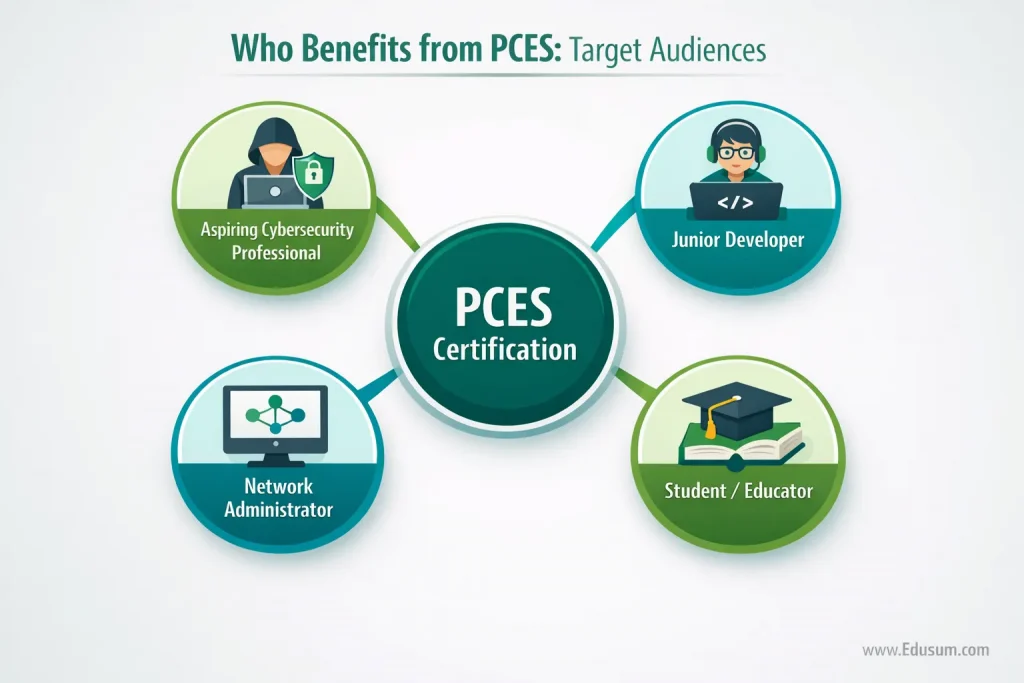
This certification is ideal for:
- Aspiring Cybersecurity Professionals: Individuals seeking a clear entry point into the security domain.
- Junior Developers: Programmers looking to infuse security best practices into their development workflow.
- Network Administrators: Professionals aiming to automate security tasks and enhance network defense using Python scripts.
- Students and Educators: Those studying or teaching cybersecurity with a focus on practical Python applications.
The PCES credential effectively bridges the gap between theoretical security knowledge and its real-world implementation through code.
Essential Skills Verified by PCES
Achieving the Python Institute PCES certification demonstrates proficiency in several critical areas, forming a solid base for advanced cybersecurity roles. Candidates will prove their capability in tasks that range from analyzing network traffic to implementing basic cryptographic functions. This involves understanding how Python libraries can be leveraged to interact with systems at a security level, performing data analysis, and developing simple security tools.
The validated skill set includes:
- Network Reconnaissance Fundamentals: Identifying open ports and services, and understanding basic network scanning techniques using Python.
- Cryptography Basics: Applying fundamental encryption and hashing algorithms with Python for data protection and integrity.
- Malware Analysis Principles: Recognizing different types of malware and understanding Python’s role in basic static or dynamic analysis.
- Secure Coding Practices: Writing Python code that mitigates common vulnerabilities such as injection flaws and insecure direct object references.
- Digital Forensics Introduction: Collecting and analyzing digital evidence, and understanding file system forensics using Python tools.
- Web Application Security: Identifying basic vulnerabilities in web applications and scripting simple Python tools for penetration testing.
These skills are increasingly vital in a digital landscape where Python is a preferred language for scripting, automation, and security analysis.
Unlocking Career Pathways with PCES
Obtaining the Python Institute PCES certification can significantly enhance career prospects within the rapidly expanding field of cybersecurity. This credential serves as a formal acknowledgment of specialized Python skills, making candidates more attractive to organizations actively seeking individuals capable of contributing to their security posture from day one. It helps position professionals for entry-level roles that demand both programming acumen and an understanding of cyber defense.
Expanding Your Professional Horizons
The PCES certification provides a distinct advantage by opening doors to various roles where Python for cybersecurity is a core requirement. Employers highly value candidates who can demonstrate practical skills validated by a reputable vendor like the Python Institute. This certification specifically prepares individuals for roles focused on implementing, monitoring, and maintaining security measures.
Potential career paths include:
- Junior Security Analyst: Assisting in monitoring security events, analyzing alerts, and responding to incidents.
- Cybersecurity Intern: Gaining practical experience in security operations, often involving Python scripting for automation.
- Security Operations Center (SOC) Technician: Supporting the daily operations of a SOC, leveraging scripting for data processing and alert management.
- Python Developer (Security-focused): Developing tools and applications with an emphasis on secure coding and vulnerability assessment.
- Penetration Testing Assistant: Aiding in vulnerability assessments and penetration tests, utilizing Python scripts for enumeration and exploitation.
Each role benefits from the PCES-validated ability to apply Python for security tasks, from network reconnaissance to basic threat intelligence.
Strategic Advantages in a Competitive Market
In today’s cybersecurity job market, a certification like PCES differentiates candidates by showcasing a specialized skill set that goes beyond generic IT knowledge. It demonstrates proactive learning and a commitment to mastering tools essential for modern cyber defense. This strategic advantage can lead to faster career progression and access to more specialized opportunities, including roles in security engineering and incident response.
The certification’s benefits extend to:
- Enhanced Employability: A formal credential can make your resume stand out to recruiters and hiring managers.
- Higher Earning Potential: Specialized skills often command better salaries, even at entry-level positions.
- Foundational Knowledge: Provides a strong base for pursuing more advanced cybersecurity certifications and specializations.
- Industry Recognition: Python Institute is a recognized vendor, adding credibility to your expertise.
By validating both Python programming skills and security concepts, PCES aligns candidates with current industry demands for practical, hands-on security professionals.
Crafting Your PCES Exam Preparation Blueprint
Effective preparation for the Python Institute PCES exam requires a structured approach, focusing on a deep understanding of the core concepts and their practical implementation in Python. Candidates should not only memorize theories but also engage in hands-on coding exercises to solidify their knowledge. A well-defined study plan, combined with quality resources, is crucial for success.
Leveraging Official Resources and Study Materials
The Python Institute offers resources that are invaluable for PCES exam preparation. These official materials provide a clear outline of the exam’s scope and objectives, ensuring that candidates focus on the most relevant topics. Supplementing these with additional curated content can further deepen understanding and broaden practical application skills. Candidates can explore the official syllabus details and other valuable information directly on the Python Institute’s PCES page.
Key preparation components include:
- Official Exam Syllabus: This is the definitive guide to all topics covered in the exam. Candidates should meticulously review each point to ensure comprehensive coverage. You can find detailed syllabus information on the Python Institute PCES syllabus page.
- Online Courses: Many reputable platforms offer structured courses specifically designed for Python for cybersecurity or PCES preparation. These often include video lectures, coding labs, and quizzes.
- Python Security Books: Textbooks dedicated to Python in cybersecurity provide in-depth explanations and practical examples that can complement formal courses.
- Coding Practice: Regular practice with Python scripting is paramount. Work through exercises that simulate real-world security scenarios, such as network scanning, password hashing, and file manipulation.
Utilizing a variety of resources ensures a well-rounded and robust preparation strategy.
The Role of Practice Questions and Assessments
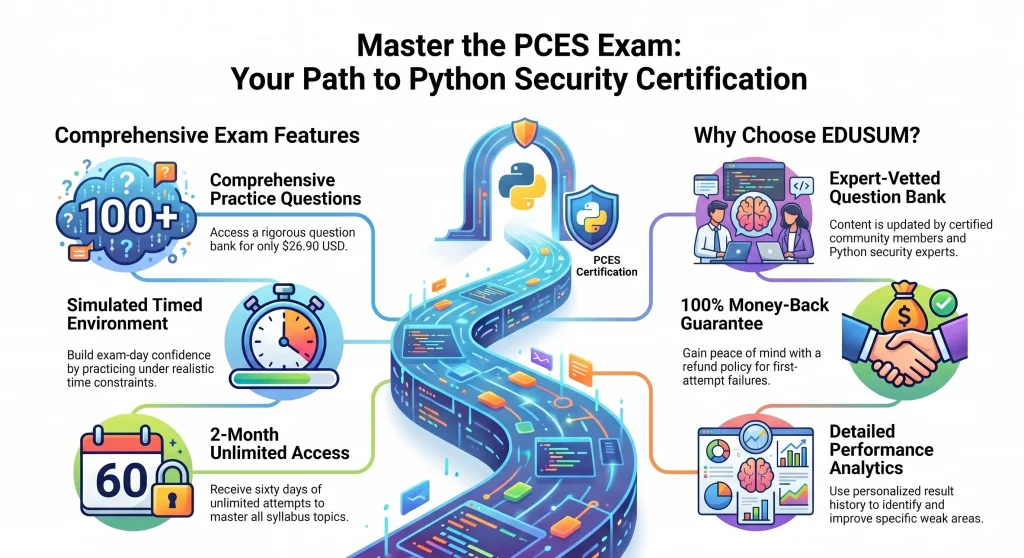
Engaging with practice questions and mock exams is an indispensable part of preparing for the Python Institute PCES certification. These tools help candidates familiarize themselves with the exam format, identify areas of weakness, and build confidence under timed conditions. Regularly testing your knowledge helps in reinforcing learning and refining problem-solving skills, ultimately leading to improved performance on the actual exam.
To optimize your practice:
- Sample Questions: Work through available PCES sample questions to understand the question types and difficulty level.
- Mock Exams: Take full-length practice tests to simulate the actual exam environment. This helps in managing time effectively and reducing exam-day anxiety. Platforms like Edusum offer practice exams that can be highly beneficial.
- Review Explanations: After completing practice tests, thoroughly review incorrect answers and understand the correct solutions. This is a critical step for learning from mistakes.
- Study Groups: Collaborating with peers can provide different perspectives and help in understanding complex topics through discussion and shared problem-solving.
Consistent practice and self-assessment are key to mastering the breadth of topics covered in the PCES exam.
Sustaining Growth in Python Security Specialization
Earning the Python Institute PCES certification is a significant milestone, but it also marks the beginning of a continuous journey in cybersecurity. The threat landscape evolves rapidly, necessitating ongoing learning and skill refinement. Professionals should actively seek opportunities to apply their newly acquired skills and keep abreast of emerging technologies and attack vectors.
Applying PCES Skills in Real-World Scenarios
Translating theoretical knowledge into practical application is crucial for cementing expertise and making a tangible impact. Post-certification, candidates should look for projects, internships, or volunteer opportunities where they can actively use Python for security tasks. This hands-on experience not only enhances skills but also builds a portfolio that demonstrates real-world capability.
Consider these avenues for practical application:
- Personal Security Projects: Develop your own Python scripts for automating security checks, analyzing logs, or creating simple network tools.
- Open-Source Contributions: Participate in open-source cybersecurity projects that use Python, gaining exposure to collaborative development and diverse security challenges.
- Capture The Flag (CTF) Events: Engage in CTF competitions to apply your Python and security skills in a gamified, challenging environment.
- Workplace Application: Propose or undertake security-focused tasks within your current role, even if it’s not a dedicated cybersecurity position.
Each practical engagement reinforces learning and prepares you for more advanced security challenges.
Pathway to Advanced Cybersecurity Certifications
The Python Institute PCES certification provides a strong foundation for pursuing higher-level cybersecurity credentials. Its emphasis on practical Python skills for security aligns well with more advanced certifications that delve deeper into areas like penetration testing, incident response, or security architecture. Leveraging PCES as a stepping stone can accelerate your progression towards becoming a highly specialized security expert.
For continued learning and growth, consider exploring:
- Python Institute Certifications: Look into other Python Institute offerings that build upon PCES, such as those focusing on advanced Python programming or specialized security domains.
- Vendor-Neutral Security Certifications: Certifications like CompTIA Security+ or CySA+ can broaden your understanding of overarching security principles and practices.
- Cloud Security Certifications: With the rise of cloud computing, credentials from AWS, Azure, or Google Cloud in security are increasingly valuable.
- Specialized Penetration Testing Certifications: For those interested in offensive security, certifications from organizations like Offensive Security (OSCP) can be a logical next step.
Continuous professional development is key to maintaining relevance and advancing in the dynamic cybersecurity field. For more insights on various Python Institute offerings, explore the resources available at Python Institute Certification Hub.
Decoding the PCES Exam: Cost and Registration Insights
Understanding the logistics of the Python Institute PCES exam, including its cost and registration process, is a vital part of your preparation strategy. While specific fees can fluctuate based on location and promotions, candidates should budget for both the exam fee and any associated training or study materials. The registration process is typically straightforward, managed through the Python Institute’s official channels or authorized testing centers.
Navigating the Exam Logistics
The Python Institute typically offers its exams through a network of testing partners, providing flexibility for candidates worldwide. It’s advisable to check the official Python Institute website for the most current information regarding registration procedures, exam centers, and scheduling options. Candidates should ensure they meet any technical requirements for online proctoring, if that option is chosen, and prepare for any identity verification steps.
Points to consider:
- Exam Cost: The fee for the PCES certification exam varies. Candidates should consult the official Python Institute website directly or contact an authorized testing partner for the most accurate and up-to-date pricing.
- Registration Process: Typically involves creating an account with the Python Institute or its testing partner, selecting the PCES exam, choosing a testing method (online or in-person), and scheduling a date and time.
- Exam Format: While the specific format (e.g., number of questions, question types) is not detailed in the inputs, candidates should expect a mix of multiple-choice and potentially performance-based questions designed to assess both theoretical understanding and practical application of Python security concepts.
- Passing Score: The exact passing score for the PCES exam is generally not publicly disclosed but is set to ensure candidates demonstrate adequate proficiency. Focus on comprehensive understanding rather than just aiming for a minimum score.
Being well-informed about these logistical details allows for a smoother exam experience.
The Long-Term Impact of PCES on Your Professional Trajectory
Beyond immediate job prospects, the Python Institute PCES certification lays a foundation for long-term career growth in the dynamic field of cybersecurity. It instills a disciplined approach to learning and problem-solving, skills that are invaluable throughout a professional’s career. The certification can catalyze continuous professional development, encouraging candidates to stay current with evolving threats and technologies.
The PCES credential is more than just a certificate; it represents a commitment to excellence in Python-driven security. It empowers professionals to not only understand security challenges but to actively contribute to solutions, fostering innovation and resilience in digital environments. This blend of practical Python skills and security knowledge positions individuals as critical assets in any organization’s defense strategy.
The Python Institute PCES certification provides a robust starting point for anyone serious about a career in Python-based cybersecurity. By focusing on essential skills and practical applications, it equips professionals with the knowledge needed to contribute meaningfully from day one. Embrace the preparation journey, leverage the available resources, and confidently pursue this valuable credential to significantly boost your career. For further exploration into the broader range of Python Institute certifications and how they can shape your professional growth, visit the dedicated Python Institute Certifications category.
Frequently Asked Questions
1. What skills does the Python Institute PCES certification validate?
- The PCES certification validates foundational knowledge in Python-based cybersecurity, including network reconnaissance, cryptography basics, secure coding practices, and introductory malware analysis and digital forensics using Python.
2. Who should consider taking the Python Institute PCES exam?
- The PCES exam is ideal for aspiring cybersecurity professionals, junior developers, network administrators, and students seeking to validate their entry-level expertise in applying Python for security tasks and principles.
3. What are the career benefits of earning the PCES certification?
- Earning the PCES certification can enhance employability for roles such as Junior Security Analyst or Security Operations Center Technician, provide a strong foundation for advanced cybersecurity studies, and offer a competitive edge in the job market by validating specialized Python security skills.
4. How should I prepare for the Python Institute PCES exam?
- Preparation should involve reviewing the official exam syllabus, engaging with online courses and Python security books, extensive hands-on coding practice, and utilizing practice questions and mock exams to identify knowledge gaps and build confidence.
5. Is the Python Institute PCES certification globally recognized?
- Yes, the Python Institute is an internationally recognized vendor, and its PCES certification is acknowledged globally as a credential for entry-level Python security specialists, validating skills applicable across various industries and regions.


