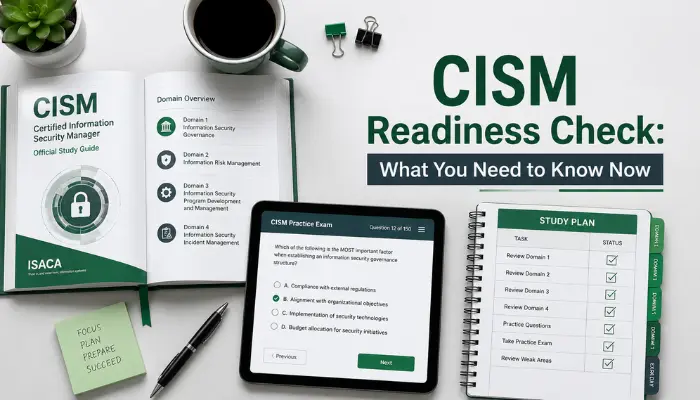
The Certified Information Security Manager (CISM) certification from ISACA stands as a pinnacle for experienced information security professionals. It validates an individual’s expertise in managing, designing, overseeing, and assessing an enterprise’s information security program. This credential is not merely about passing an exam; it signifies a deep understanding of information security governance, risk management, program development, and incident management, positioning certified individuals as leaders in their field. This article delves into the nuances of earning and leveraging the CISM certification, offering a readiness checklist, self-assessment insights, and strategies to confidently navigate the journey, moving far beyond rote memorization to true practical mastery.
Mastering the ISACA CISM Certification Requirements
Earning the CISM certification demands more than just passing the ISACA CISM exam; it requires a combination of academic knowledge and substantial real-world experience. ISACA has stringent eligibility criteria designed to ensure that CISM-certified professionals possess both the theoretical foundation and the practical expertise to excel in information security management roles. Understanding these prerequisites from the outset is crucial for any aspiring candidate, as it forms the bedrock of a credible certification journey. Without meeting these criteria, even a successful exam attempt will not lead to certification.
The primary requirement for CISM certification is documented professional experience in the field of information security. Candidates must possess at least five years of experience in information security management. This experience is typically broken down further, requiring a minimum of three years of experience in information security management within the five-year period preceding the application date, or within five years of passing the exam. This ensures that candidates have recent, relevant hands-on experience in the core areas the CISM certification covers. The experience must be gained in the CISM job practice areas, which include Information Security Governance, Information Security Risk Management, Information Security Program Development and Management, and Information Security Incident Management. For a more detailed breakdown of these requirements and how they align with your professional background, consider reviewing the comprehensive insights into CISM certification preparation requirements. Deep dive into CISM certification preparation on Edusum. This early assessment ensures your professional journey aligns with ISACA’s expectations.
Valuing the CISM Certification for Career Growth
The CISM certification is a strategic investment in a cybersecurity professional’s career, offering substantial benefits that extend far beyond a mere resume booster. This credential signals to employers that an individual possesses the advanced knowledge and practical skills required to develop and manage an enterprise-wide information security program. In an increasingly threat-laden digital landscape, organizations prioritize leaders who can effectively govern security, manage risks, and respond to incidents strategically.
Achieving CISM status often translates into enhanced career opportunities and increased earning potential. Professionals holding this certification are typically sought after for senior-level roles such as Information Security Manager, CISO (Chief Information Security Officer), Security Consultant, and Information Risk Manager. These positions command higher salaries and offer greater responsibility, reflecting the critical nature of information security management in modern enterprises. The CISM certification also fosters a global recognition of expertise, opening doors to international career prospects. Furthermore, it demonstrates a commitment to ongoing professional development, a quality highly valued by employers in a rapidly evolving field. For more insights into the broader career landscape validated by this credential, you can explore the official ISACA CISM page for professionals.
- Leadership Validation: CISM certifies an individual’s capability to lead and govern information security initiatives.
- Strategic Insight: Develops a strategic mindset necessary for aligning security programs with business objectives.
- Enhanced Credibility: Bolsters professional standing and trustworthiness within the cybersecurity community and with executive leadership.
- Networking Opportunities: Connects professionals with a global network of ISACA-certified peers and experts.
- Future-Proofing Skills: Equips professionals with adaptable skills to navigate emerging threats and technologies.
Crafting Your ISACA CISM Certification Study Guide
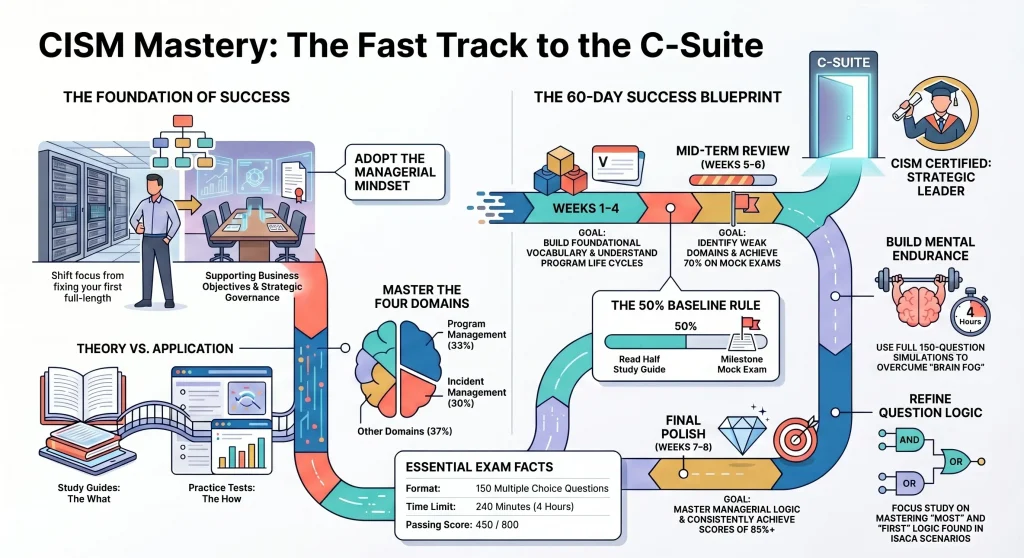
Effective preparation for the ISACA CISM exam demands a structured approach, focusing on comprehensive understanding rather than superficial memorization. Developing a personalized study guide is a critical step in this process. This isn’t just about accumulating facts; it’s about internalizing the principles and practices of information security management that ISACA champions. Given the absence of specific syllabus details, your guide must be adaptable and focus on the overarching domains of information security as generally understood in the industry.
A robust study plan should begin with an honest assessment of your existing knowledge and experience. Identify areas where you feel less confident and allocate more study time to those topics. Leverage official ISACA resources, such as the CISM Review Manual and CISM Review Questions, Answers & Explanations Manual, which are designed to cover the exam objectives thoroughly. Beyond these, incorporating diverse learning methods can significantly enhance retention and comprehension. This might include online courses, study groups, or even creating flashcards for key definitions and concepts. Remember, the goal is to build a holistic understanding of how information security management functions in a real-world enterprise context.
Strategic Approaches to Learning
Creating a study guide that truly prepares you for the CISM exam involves more than just listing topics. It requires integrating various learning methodologies to ensure deep understanding.
- Foundation Building: Start with the basics of information security governance and risk management to establish a strong conceptual framework.
- Scenario-Based Practice: Focus on understanding how CISM principles apply in various business scenarios, as the exam often tests practical application.
- Regular Review and Self-Assessment: Schedule frequent review sessions and use practice questions to identify gaps in your knowledge and reinforce learning.
- Official Resources First: Prioritize the official ISACA CISM Review Manual and QAE database as your primary study materials. These resources are designed to align directly with the exam objectives and ISACA’s philosophy.
- Supplement with Diverse Materials: While official materials are essential, supplementing with other reputable books, online courses, and whitepapers can offer alternative perspectives and deepen understanding, especially when dealing with complex or abstract topics.
- Active Recall Techniques: Instead of passive reading, actively test yourself by trying to recall information, explain concepts in your own words, or draw diagrams. This helps solidify knowledge in long-term memory.
The CISM Exam Cost and Fees: What to Expect
Understanding the financial commitment involved in pursuing the CISM certification is an essential part of your preparation strategy. The CISM exam cost and associated fees can vary based on several factors, including ISACA membership status and location. It’s important to budget not only for the exam itself but also for study materials, practice tests, and potentially training courses, which can significantly enhance your chances of success.
ISACA offers different pricing tiers for its members and non-members, with members typically benefiting from reduced exam registration fees. Therefore, considering an ISACA membership might be a cost-effective strategy if you plan to pursue other ISACA certifications in the future or wish to access member-exclusive resources. Beyond the initial exam fee, be mindful of potential costs for re-taking the exam if needed, as well as the fees associated with the CISM certification application process itself, which occurs after successfully passing the exam. These application fees cover the review of your professional experience to ensure it meets ISACA’s stringent requirements. Additionally, annual maintenance fees and CPE (Continuing Professional Education) reporting are required to keep your certification current.
Avoiding CISM Exam Dumps: The Ethical Path to Certification
The allure of “CISM exam dumps” can be strong for candidates seeking a shortcut to certification. However, relying on these unauthorized materials is a risky endeavor that undermines the integrity of the certification, compromises your professional credibility, and often leads to failure. ISACA, like all reputable certification bodies, explicitly condemns the use of exam dumps, viewing it as a violation of ethical conduct and examination policies.
Using exam dumps provides a false sense of security. These materials often contain outdated, incorrect, or misleading information, leading candidates to memorize answers without understanding the underlying concepts. The CISM exam is designed to test practical application and critical thinking in complex scenarios, not rote recall. Consequently, individuals who rely on dumps are ill-equipped to answer scenario-based questions and often struggle in the real-world application of their certified knowledge. Furthermore, if caught using such materials, candidates face severe penalties, including immediate disqualification, permanent bans from future ISACA exams, and revocation of any earned certifications. The only truly effective and ethically sound path to CISM certification involves dedicated study, understanding the core principles, and utilizing official and authorized study resources.
Why Authentic Preparation Matters
Investing in genuine study resources and engaging in a thorough learning process offers several advantages that exam dumps simply cannot replicate.
- Conceptual Understanding: Proper study helps you grasp the foundational theories and practical implications of information security management.
- Skill Development: It fosters the critical thinking and problem-solving skills essential for both the exam and real-world challenges.
- Long-Term Knowledge Retention: Understanding concepts leads to knowledge that lasts, rather than short-term memorization that quickly fades.
- Professional Integrity: Earning the certification through ethical means upholds your professional reputation and validates your true expertise.
- Confidence in Application: You gain the genuine confidence to apply CISM principles effectively in your role, contributing meaningfully to your organization’s security posture.
Optimizing Your CISM Certification Training Programs
Selecting the right CISM certification training programs is a pivotal decision for your preparation journey. With a variety of options available, from official ISACA workshops to third-party providers and online courses, identifying a program that aligns with your learning style and schedule is crucial. The goal is to find training that not only covers the necessary content but also helps you develop the strategic thinking required for information security management.
When evaluating training programs, look for those that emphasize practical application, case studies, and interactive discussions. Programs led by experienced CISM-certified instructors can offer invaluable insights into real-world scenarios and common challenges, bridging the gap between theoretical knowledge and practical execution. Consider the format – whether instructor-led virtual sessions, self-paced online modules, or in-person bootcamps – and choose what best suits your learning preferences and availability. Many quality programs offer practice exams and review sessions, which are instrumental in solidifying your understanding and building exam-taking confidence. Ensure the training provider is reputable and their materials are aligned with ISACA’s latest exam content outline, as referenced in the official ISACA exam content outline.
Leveraging Best CISM Study Materials and Resources
The landscape of CISM study materials is extensive, and knowing which resources to prioritize can make a significant difference in your preparation efficiency and effectiveness. Beyond avoiding exam dumps, a strategic selection of study materials forms the backbone of your learning process, ensuring you cover all necessary areas comprehensively.
The cornerstone of any CISM preparation should be ISACA’s official publications. The CISM Review Manual provides a detailed explanation of all job practice areas, serving as the primary text for understanding the CISM body of knowledge. Complementing this, the CISM Review Questions, Answers & Explanations Manual is indispensable for practice, offering thousands of questions with in-depth explanations that clarify why correct answers are correct and why incorrect ones are wrong. Beyond these official staples, consider supplementary resources such as reputable online training platforms, industry whitepapers, and perhaps a well-regarded CISM textbook. Engaging with a diverse set of materials can help reinforce concepts and provide different perspectives, catering to various learning styles. The key is to consistently apply what you learn through practice and self-assessment.
Curating Your Learning Arsenal
A well-rounded set of study materials should address different aspects of learning, from foundational knowledge to practical application.
- CISM Review Manual: The authoritative source for all CISM knowledge domains and concepts, crucial for foundational understanding.
- CISM Review Questions, Answers & Explanations Manual: Essential for applying knowledge, practicing exam-style questions, and understanding ISACA’s reasoning.
- Online Training Courses: Interactive platforms often provide video lectures, quizzes, and simulated exams, offering a structured learning path.
- Study Groups and Forums: Collaborating with peers can provide different perspectives, clarify doubts, and motivate consistent study.
- Whitepapers and Industry Reports: Staying updated with current information security trends and best practices adds depth to your understanding and practical context.
- Practice Exam Providers: Reputable providers offer full-length simulated exams, helping you manage time and test your readiness under exam conditions.
Navigating the CISM Certification Eligibility Criteria
Before diving deep into study, a clear understanding of the CISM certification eligibility criteria is paramount. This credential is designed for experienced professionals, and ISACA maintains rigorous standards to preserve the value and recognition of the certification. Meeting these requirements ensures that certified individuals possess a proven track record in information security management, not just theoretical knowledge.
As previously highlighted, the core requirement revolves around professional experience. Specifically, candidates must possess a minimum of five years of professional information security work experience, with at least three years of information security management experience. This management experience must be accrued in three or more of the CISM job practice areas and must be obtained within the ten-year period preceding the application date for certification, or within five years from the date of successfully passing the exam. It’s also crucial that this experience is full-time, professional, and non-clerical. ISACA’s application process requires detailed documentation and verification of this experience, so maintaining accurate records of your professional roles and responsibilities is essential from the start.
Preparing for ISACA CISM Exam: Practical Steps for Success
Success on the ISACA CISM exam hinges on a well-executed preparation strategy that goes beyond just studying content. It involves developing effective exam-taking skills, managing your time, and maintaining a positive mindset. The CISM exam is known for its scenario-based questions, which require candidates to apply their knowledge to complex situations rather than simply recalling facts.
To effectively prepare, begin by thoroughly understanding the exam’s format and question types. Allocate dedicated study blocks and adhere to a consistent schedule. Regularly test your knowledge with practice questions, focusing not just on the correct answer, but on understanding the rationale behind each choice. This critical analysis helps you internalize ISACA’s perspective on information security management. Additionally, simulate exam conditions by taking full-length practice tests to improve your time management and stamina. Paying attention to your physical and mental well-being during this intensive period is also vital for optimal performance on exam day.
Essential Exam Preparation Tips
Adopting a strategic mindset towards the CISM exam can significantly boost your confidence and performance.
- Understand Question Structure: Familiarize yourself with how ISACA frames questions, often requiring you to choose the “best” answer among several plausible options.
- Time Management Practice: During practice exams, strictly adhere to time limits to build endurance and efficiency for the actual test.
- Review Incorrect Answers Thoroughly: Don’t just identify wrong answers; understand why they were wrong and what concept you misunderstood.
- Prioritize Core Concepts: Focus on the fundamental principles of information security governance and risk management, as these underpin many exam questions.
Stay Updated: Information security is dynamic. Keep abreast of current trends, regulations, and best practices that might influence strategic decision-making.
Assessing ISACA CISM Practice Exams and Questions
Engaging with ISACA CISM practice exams and questions is arguably the most crucial component of your preparation, after solidifying your conceptual knowledge. These tools provide invaluable insights into the exam’s structure, question style, and the depth of understanding required. They help you gauge your readiness, identify knowledge gaps, and refine your exam-taking strategy.
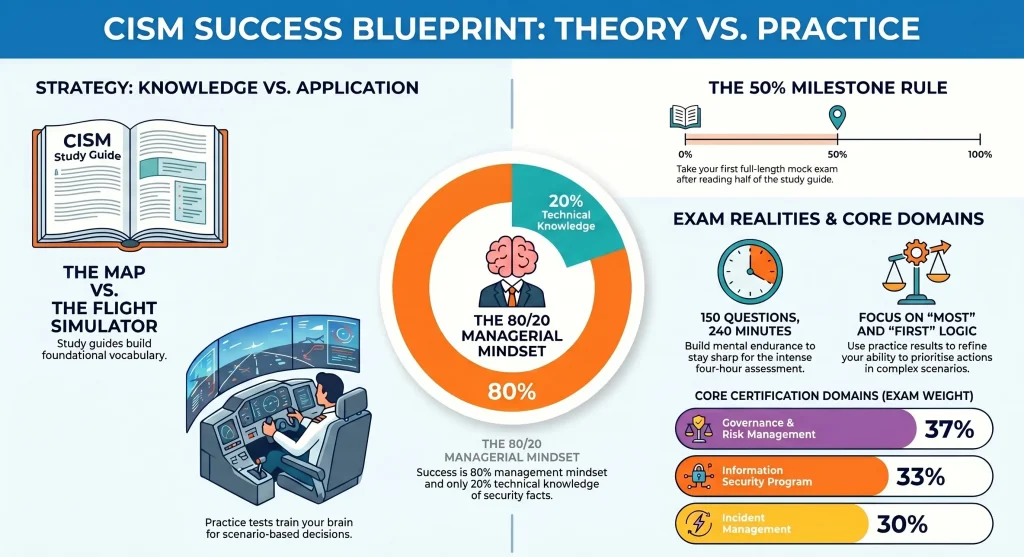
The official ISACA CISM Review Questions, Answers & Explanations Manual is the gold standard for practice questions, offering a vast database that closely mimics the actual exam experience. Beyond official resources, various reputable third-party providers offer practice tests that can supplement your studies. When utilizing these resources, focus on understanding the rationale behind each correct answer, rather than simply memorizing the answers themselves. Pay close attention to scenario-based questions, which require critical thinking and the application of CISM principles to complex situations. Regular practice builds confidence, improves your ability to manage time effectively under pressure, and fine-tunes your approach to ISACA’s unique question methodology. For those looking for extensive practice questions, consider reputable platforms offering CISM practice questions.
Realizing CISM Certification Salary Expectations and Job Roles
The CISM certification holds significant weight in the cybersecurity job market, directly influencing salary expectations and the types of roles available to certified professionals. As organizations increasingly prioritize robust information security, the demand for skilled managers who can lead and govern security programs continues to grow, making CISM a highly valued credential.
Professionals with CISM certification typically command higher salaries than their uncertified counterparts. While actual salaries vary based on factors like experience, location, industry, and specific job responsibilities, CISM holders often see a substantial premium. Common job titles that frequently require or strongly prefer CISM certification include Information Security Manager, Cybersecurity Manager, CISO (Chief Information Security Officer), Information Risk Manager, and Security Architect. These roles are strategic in nature, focusing on the overall security posture of an organization, rather than purely technical implementation. The certification signifies a candidate’s ability to translate technical security details into business language, manage risk effectively, and align security initiatives with organizational goals. This blend of technical acumen and business leadership is what makes CISM-certified individuals so valuable to employers.
Maintaining ISACA CISM Certification: CPE Credits Explained
Earning the CISM certification is a significant achievement, but maintaining it requires an ongoing commitment to professional development. ISACA mandates that CISM-certified professionals earn and report Continuing Professional Education (CPE) credits annually to ensure their knowledge and skills remain current in the ever-evolving field of information security. This requirement underscores the dynamic nature of cybersecurity and the need for continuous learning.
CPE credits can be earned through a variety of activities, including attending industry conferences, participating in webinars, completing professional training courses, authoring articles or books, mentoring, or volunteering. ISACA provides a detailed framework for eligible activities and the number of credits awarded for each. Typically, CISM holders must earn a minimum of 20 CPE hours annually and a total of 120 CPE hours over a three-year reporting cycle. Failure to meet these requirements can lead to the revocation of the certification. This commitment to continuous learning not only maintains your CISM credential but also ensures you remain at the forefront of information security best practices, further enhancing your career longevity and expertise.
Charting Your ISACA CISM Certification Pathway and Roadmap
Embarking on the ISACA CISM certification journey involves more than just passing an exam; it requires a structured pathway and a clear roadmap. This comprehensive approach ensures that candidates strategically plan their preparation, experience acquisition, and application process, maximizing their chances of success and a smooth credentialing experience.
Your roadmap should begin with a thorough assessment of your current professional experience against ISACA’s eligibility criteria. If you fall short, identify the specific areas where you need to gain more experience and actively seek opportunities to fill those gaps. Once you meet the experience requirements or are on track to do so, focus on developing a robust study plan. This involves selecting appropriate study materials, dedicating time for consistent learning, and utilizing practice exams effectively. Post-exam, the pathway includes the application process, where you formally submit your documented experience for ISACA’s review and verification. Thinking of starting your CISM journey? You can learn more about how to start your CISM career journey today. This detailed approach ensures every step is purposeful and contributes to your ultimate goal.
Successfully Completing the CISM Certification Application Process
After passing the ISACA CISM exam, the final step to becoming a certified CISM professional is successfully navigating the certification application process. This stage is as critical as the exam itself, as it involves documenting and verifying your professional experience to ensure it meets ISACA’s stringent eligibility criteria. Many candidates overlook the importance of this administrative phase, but meticulous preparation here is key to a smooth credentialing.
The application requires detailed information about your work history, specifically highlighting your experience in the CISM job practice areas. You will need to provide contact information for your employers or direct supervisors who can verify your professional experience. It is advisable to gather this information and inform your references in advance to avoid delays. The application also includes an agreement to abide by ISACA’s Code of Professional Ethics. Once submitted, ISACA’s certification board reviews your application to ensure all requirements are met. This thorough verification process upholds the integrity and value of the CISM credential.
The CISM certification is a testament to an information security professional’s expertise, commitment, and strategic acumen. It represents a journey beyond mere examination, demanding real-world experience, ethical preparation, and a dedication to continuous learning. By thoroughly understanding the requirements, strategically planning your study, and embracing the value of authentic knowledge, you can confidently navigate the path to becoming a certified ISACA CISM leader, ready to face the evolving challenges of information security management. Take the truth of this certification beyond the exam room and apply it to drive meaningful impact in your career and organization.
Frequently Asked Questions
1. What are the CISM eligibility requirements beyond passing the exam?
Beyond passing the ISACA CISM exam, candidates must possess at least five years of professional information security work experience. A minimum of three years of this experience must be in information security management, accumulated within three or more CISM job practice areas. This management experience must be obtained within the ten-year period preceding the application date or within five years of passing the exam.
2. How long does CISM certification typically remain valid?
The CISM certification is valid for a three-year period. To maintain active status, certified professionals must earn a minimum of 20 Continuing Professional Education (CPE) hours annually and a total of 120 CPE hours over the three-year reporting cycle. Additionally, an annual maintenance fee must be paid to ISACA.
3. Can I take the CISM exam if I don’t meet the experience requirements yet?
Yes, you can take and pass the CISM exam before meeting the full experience requirements. However, you will not be officially certified until all experience criteria are met and verified by ISACA through the application process. The experience must be gained within five years from the date of passing the exam.
4. What types of roles typically require or benefit most from CISM certification?
CISM certification is highly beneficial for, and often required in, senior-level information security management roles. These include Information Security Manager, Chief Information Security Officer (CISO), Information Risk Manager, Security Consultant, and Cybersecurity Auditor. The certification validates strategic leadership and governance capabilities.
5. What is the recommended approach to studying for the CISM exam without relying on exam dumps?
The recommended approach involves utilizing official ISACA resources such as the CISM Review Manual and the CISM Review Questions, Answers & Explanations Manual. Focus on understanding core concepts, applying knowledge through scenario-based practice questions, and creating a structured study plan. Ethical preparation ensures genuine knowledge acquisition and long-term professional credibility.


