
Fifty-five questions in ninety minutes, and you need thirty-eight of them right. The CIW Web Security Associate exam is small, cheap, and unusually specific about what it wants: encryption methods, attack recognition, firewall types, and the design of a layered firewall system. It does not pretend to certify a security career. It certifies that you understand how network security actually works before someone puts you near a production system.
That modest scope is exactly why it suits people at the start of the path. This guide covers what 1D0-671 tests, why cryptography and firewalls dominate the objectives, what a 69.09 percent pass mark really demands, and how the credential sits against other entry level security options.
Table of Contents
- What Does CIW Web Security Associate Certify?
- What Does the 1D0-671 Exam Look Like?
- What Are the Six Exam Objectives?
- How Much Cryptography Does the Exam Expect?
- Why Do Firewalls Get Two Separate Objectives?
- What Does Security Policy Mean on This Exam?
- How Does It Compare With Other Entry Level Security Certs?
- How Should You Prepare for 1D0-671?
- Who Should Take This Certification?
- Frequently Asked Questions About 1D0-671
- Conclusion
What Does CIW Web Security Associate Certify?
The CIW Web Security Associate credential certifies foundational competence in network and web security: recognising threat types, understanding how encryption protects data in transit, identifying attacks, and designing firewall protection in layers. It is an associate level credential and it is honest about that, which is rarer than it sounds.
What separates it from a purely conceptual course is that its objectives are written as things you do rather than things you know about. Deploying encryption tools, planning a firewall system, and responding to a security breach all appear as actions rather than topics.
The Gap It Fills
Many people arrive in security from web development, help desk, or networking without a structured grounding in why the controls exist. This exam supplies that grounding in a form an employer recognises, at a price and time commitment that does not require a training budget.
What Does the 1D0-671 Exam Look Like?
1D0-671 presents 55 questions in 90 minutes with a passing score of 69.09 percent, which works out to 38 correct answers. The exam price is USD $175 and scheduling runs through the PSI Store. At roughly 98 seconds per question, timing is comfortable by exam standards.
| Specification | Detail |
|---|---|
| Exam name | CIW Web Security Associate |
| Exam code | 1D0-671 |
| Number of questions | 55 |
| Duration | 90 minutes |
| Passing score | 69.09 percent |
| Exam price | USD $175 |
| Scheduling | PSI Store |
Why the Pass Mark Is Unforgiving
A 69.09 percent threshold on 55 questions means you can afford 17 wrong answers and no more. On a small paper each question carries close to two percent, so a single weak objective can cost you the exam in a way it would not on a 175 question paper. Even coverage matters more here than depth in a favourite area.
Working through the published CIW sample questions is the quickest way to find which objective is your weak one while there is still time to fix it.
What Are the Six Exam Objectives?
The 1D0-671 syllabus publishes six objectives rather than percentage weighted domains. That means no objective can be safely skipped, and it also means the phrasing of each objective is your best guide to what will be asked.
| Objective | What it asks of you |
|---|---|
| Significance of network security and elements of an effective security policy | Risk factors, key resources, threat types, access control |
| Encryption and the encryption methods used in internetworking | The three main methods and where each applies |
| Universal guidelines and principles applied to specific solutions | Turning principles into a design that fits a situation |
| Security principles and identification of security attacks | Recognising attacks and deploying protective tools |
| Firewall types and common firewall terminology | What each type does and the vocabulary around it |
| Planning a firewall system with multiple levels of protection | Design, proactive detection, breach response, alerting |
Read the objectives as verbs. Two of them ask you to define, two ask you to identify, and two ask you to apply or plan. The applied pair is where candidates who only read the material tend to lose marks.
How Much Cryptography Does the Exam Expect?
The encryption objective on 1D0-671 asks you to identify the three main encryption methods used in internetworking and define what each one does. This is recognition and application rather than mathematics. Nobody is asking you to implement a cipher.
The Three Methods and Their Jobs
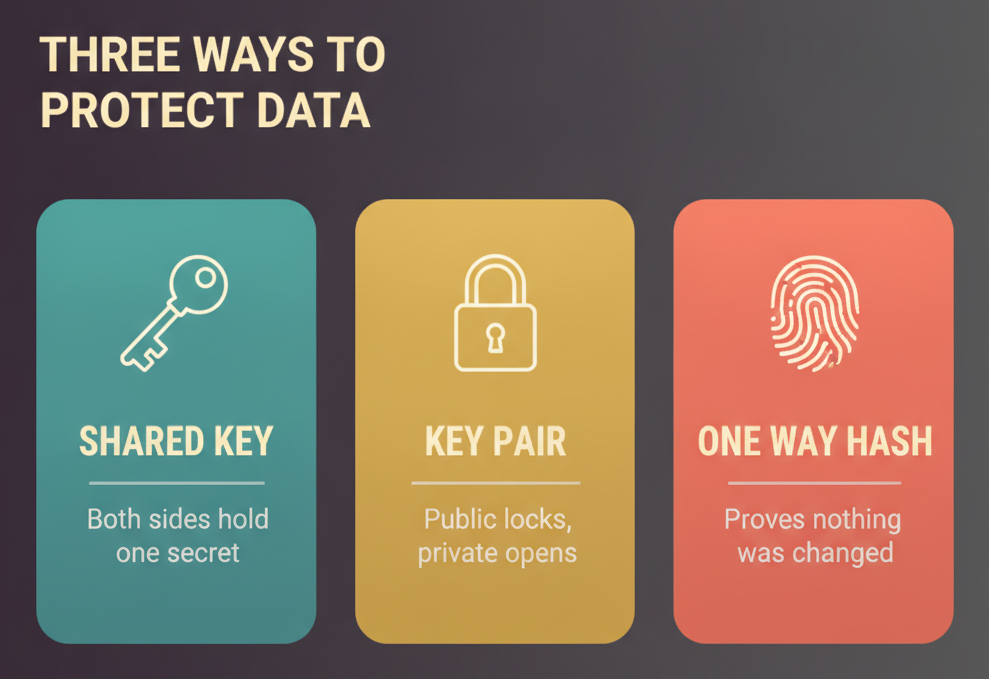
- Symmetric encryption, where one shared private key both encrypts and decrypts, giving speed at the cost of key distribution
- Asymmetric encryption, where a public and private key pair solves the distribution problem at the cost of performance
- Hash encryption, which is one way and proves integrity rather than providing confidentiality
The syllabus also names practical deployment of Pretty Good Privacy and GnuPG on Windows and Linux systems, which signals that the exam wants you to have handled these tools rather than merely read about them. Installing GnuPG and signing a file once will teach you more than a chapter will.
Why Do Firewalls Get Two Separate Objectives?
Two of the six 1D0-671 objectives concern firewalls, which is a third of the syllabus for a single control type. The split is deliberate: one objective covers what firewalls are, and the other covers how you build a system out of them.
Knowing the Types and the Vocabulary
The first firewall objective is definitional. You need to know what each firewall type does, how it differs from the others, and the role a firewall plays in a wider architecture. This is the part most candidates find straightforward.
Designing Protection in Layers
The second is where the exam gets interesting. It covers firewall system design, proactive detection, setting traps, security breach response, and security alerting organisations. That is an operational picture rather than a product one, and it expects you to think about what happens after something gets through, not just how to keep it out.
What Does Security Policy Mean on This Exam?
The first 1D0-671 objective covers the significance of network security and the elements of an effective security policy, including risk factors, security related organisations, key resources to secure, general threat types, and access control. It is the widest objective on the paper and the easiest to under prepare.
Policy here does not mean a document nobody reads. It means the reasoning that decides what gets protected, how much protection is proportionate, and who is allowed to do what. Candidates who can explain why a control exists tend to answer these questions correctly even when the specific scenario is unfamiliar. The OWASP Top Ten project is a useful companion for the threat type material, since it names the categories the exam expects you to recognise.
How Does It Compare With Other Entry Level Security Certs?
An entry level security certification is a starting signal rather than a destination, and 1D0-671 competes with several credentials that make similar promises. Its distinguishing features are price, scope, and the unusual amount of firewall design content for an associate level exam.
| Consideration | CIW Web Security Associate |
|---|---|
| Cost | USD $175, low relative to most security credentials |
| Length | 55 questions in 90 minutes, a single short sitting |
| Emphasis | Encryption, attack recognition, and firewall system design |
| Prerequisite | None, which makes it genuinely entry accessible |
| Best used as | Structured grounding before a broader security credential |
CIW credentials tend to travel in families, and candidates often pair this with another associate exam from the same programme. Anyone considering that route will find this look at the CIW Internet Business Associate exam a useful sense of how the programme structures its foundational tier.
How Should You Prepare for 1D0-671?
Because 1D0-671 has six objectives and no published weightings, preparation should be broad and even rather than deep and selective. The margin for error is 17 questions, so a single neglected objective is a genuine risk.
- Map the six objectives onto a checklist. Score your confidence in each before studying anything.
- Do the encryption practically. Install GnuPG, generate a key pair, sign and verify a file.
- Learn firewall types by what they inspect. The differences become memorable once framed that way.
- Sketch a layered design. Draw a system with detection and response, not just a barrier.
- Name the attacks aloud. Recognition under time pressure is a different skill from recognition at leisure.
- Sit a timed practice paper. Confirm you can clear 38 correct with room to spare.
Candidates who like to understand a programme’s exam style before committing will find this breakdown of the CIW Database Design Specialist exam a helpful indication of how CIW writes its questions across specialisms.
Who Should Take This Certification?
1D0-671 suits people who need credible evidence of security fundamentals without a long study commitment or an employer sponsored training budget. It is deliberately accessible, which makes it useful at exactly the career stage where credentials are hardest to justify.
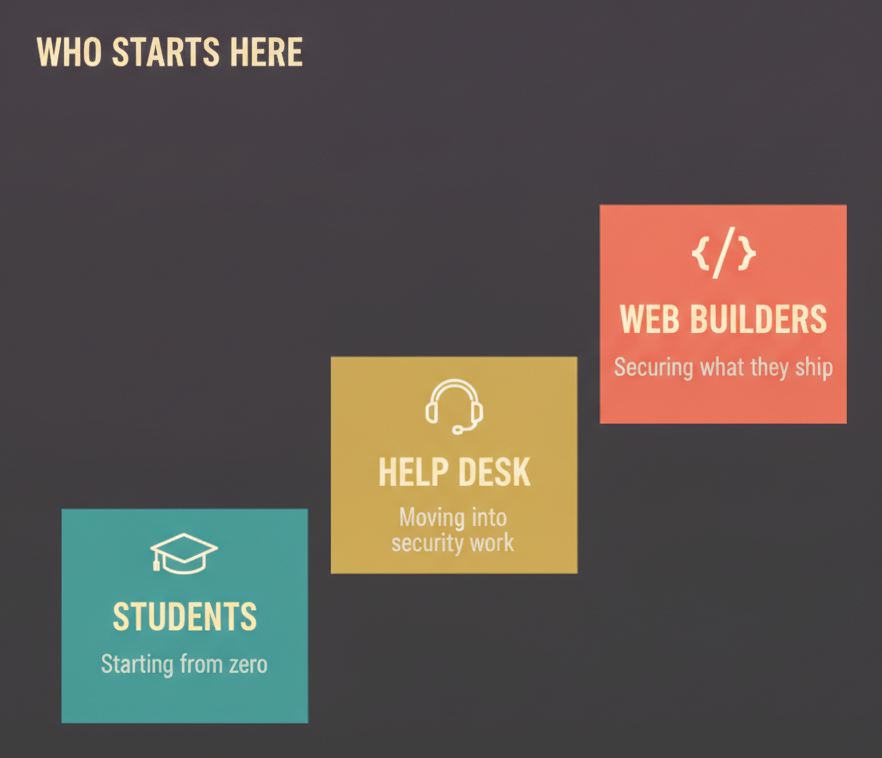
- Web developers who need to understand the controls their applications sit behind
- Help desk and support staff moving toward a security focused role
- Junior network administrators formalising knowledge picked up on the job
- Students and career changers who need a first recognised credential
- Small business IT generalists responsible for security without a specialist title
The official CIW Web Security Associate page sets out the course and credential structure, scheduling runs through PSI exam delivery, and current security analyst salary data gives a realistic view of where the path leads.
Frequently Asked Questions About 1D0-671
How many questions are on the CIW 1D0-671 exam?
The exam has 55 questions and a 90 minute time limit. The passing score is 69.09 percent, which means you need 38 correct answers and can afford 17 incorrect ones.
How much does the CIW Web Security Associate exam cost?
The published exam price is USD $175, which is low compared with most security certifications. Scheduling is handled through the PSI Store, and pricing can vary if the exam is bundled with training.
Are there prerequisites for 1D0-671?
No formal prerequisites apply. The credential is designed as an entry point, so candidates from development, support, or networking backgrounds can sit it without holding another certification first.
How much cryptography knowledge does the exam require?
You need to identify the three main encryption methods used in internetworking and explain what each does. The exam also names practical deployment of PGP and GnuPG, so hands on familiarity helps more than theory.
Why does the syllabus cover firewalls twice?
One objective covers firewall types and terminology, and a separate objective covers planning a layered firewall system including detection, breach response, and alerting. Definition and design are tested as different skills.
Is 1D0-671 enough to get a security job?
On its own it is a starting signal rather than a qualification for a specialist role. It works best as evidence of structured fundamentals alongside practical experience or as groundwork before a broader credential.
How long does it take to prepare for the exam?
Candidates with some networking or development background commonly prepare in a few weeks. Because there are six objectives and no published weightings, even coverage matters more than concentrated study in one area.
What is hash encryption and why is it listed separately?
Hashing is a one way transformation that proves integrity rather than providing confidentiality. It is grouped with encryption methods because it is a core internetworking protection, but it does not encrypt in the reversible sense.
Where do I take the 1D0-671 exam?
Scheduling runs through the PSI Store. Availability includes test centre and online options depending on your region, so confirm the delivery formats offered where you are before booking.
Does the CIW Web Security Associate certification expire?
CIW associate level credentials are generally issued without a routine expiry cycle, though the underlying technology moves regardless. Confirm current terms on the certifying body’s page when you certify.
Conclusion
1D0-671 is a small exam with a narrow, honest claim: that you understand why network security controls exist and how the main ones work. Fifty-five questions, six objectives, and a 38 answer pass mark reward even preparation rather than a strong area carrying a weak one. Encryption and firewall design take up more of the syllabus than anything else, and the applied objectives punish reading without practice.
Install GnuPG and use it, draw a layered firewall system with detection and response in it, name attacks until recognition is automatic, and sit one timed paper before you book. For an entry level security certification, that is a proportionate amount of work for a credential an employer will recognise.


