Product renames are usually marketing. This one moved the exam.
Oracle Autonomous Database became Oracle Autonomous AI Database, and the professional credential behind it followed. On most certifications that would change a heading and nothing else. On the 1Z0-931-26 exam it added two domains that did not exist in the earlier releases: one for Select AI, which lets you query the database in plain language, and one for an MCP server that lets an AI agent talk to the database directly. Together they carry twelve percent of a fifty question paper. Add the semantic and full text search objectives inside the analytics block and roughly a fifth of this exam now tests material a seasoned Autonomous Database administrator has never had to know. The paper runs 90 minutes at a 68 percent pass mark and costs 245 US dollars, and it splits into nine weighted blocks rather than the four or five most Oracle professional exams use.
What Changed in the 1Z0-931-26 Release?
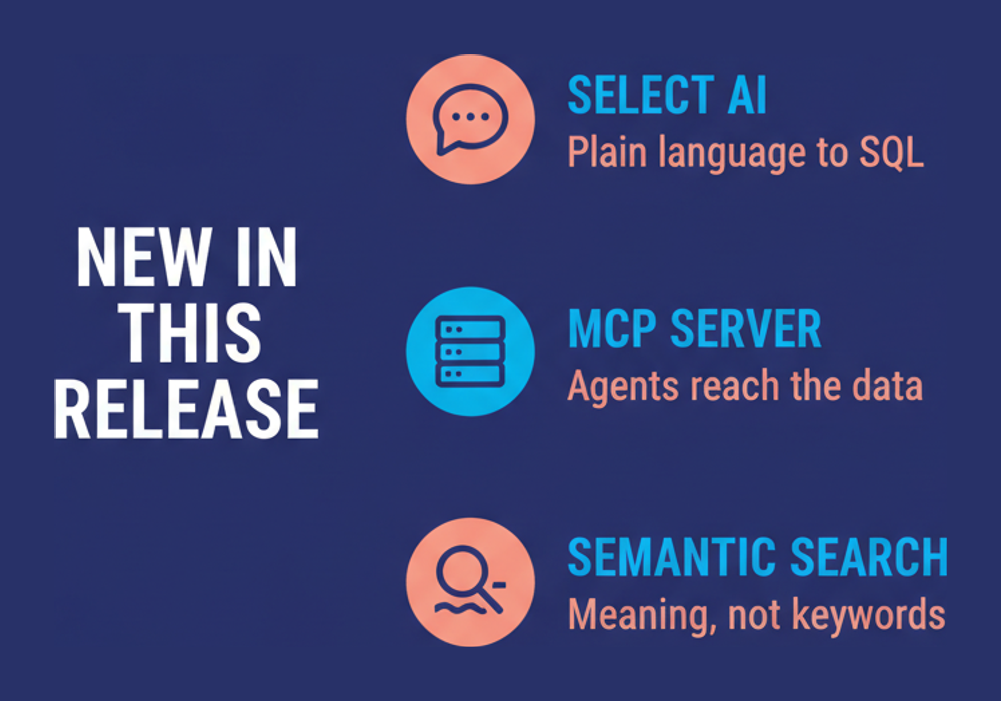
Three things, and none of them is cosmetic. The credential is now Oracle Autonomous AI Database Certified Professional rather than Autonomous Database. The blueprint carries a dedicated Select AI block worth 8 percent and an MCP server integration block worth 4 percent. And the analytics block now names AI powered semantic and full text search as an objective in its own right.
Everything a previous release tested is still there. Fundamentals, serverless architectures, dedicated deployments, performance management and migration all survive with substantial weightings. The AI material was added on top rather than swapped in, which is why the blueprint now runs to nine blocks instead of the tidier five or six an Oracle professional exam usually carries. Teams that still run their own clusters rather than Autonomous can compare this with the Oracle Clusterware exam, which stays on RAC, Grid Infrastructure and ASM.
That matters for anyone who studied an earlier release and let the certification lapse into the background. The operational half of the exam will feel familiar. The other fifth will not, because generative AI integration inside a database engine is genuinely new territory rather than a rebadged feature.
The practical reading of the rename
Oracle did not add an AI chapter to a database exam. It added the parts of the database that now speak to AI systems, which is a different thing. Select AI turns a natural language question into SQL. The MCP server lets an external agent reach the database under controlled conditions. Both are about the boundary between the database and something else, and the questions sit on that boundary.
What Are the 1Z0-931-26 Exam Details?
The 1Z0-931-26 exam is 50 multiple choice questions in 90 minutes, with a 68 percent passing score and a price of 245 US dollars before local currency adjustment. Passing awards the Oracle Autonomous AI Database Certified Professional credential. Thirty four correct answers clear the bar. Administrators who run the non-autonomous side of the platform should compare it with the Oracle 1Z0-183 certification, which keeps every tuning and backup task in the hands of the DBA.
| Field | Value |
|---|---|
| Exam name | Oracle Autonomous AI Database Professional |
| Exam code | 1Z0-931-26 |
| Credential awarded | Oracle Autonomous AI Database Certified Professional |
| Questions | 50 |
| Duration | 90 minutes |
| Passing score | 68 percent |
| Marks needed | 34 of 50 |
| Format | Multiple choice |
| Price | USD 245, varying by country and local currency |
| Weighted blocks | 9 |
Nine blocks across fifty questions produces an awkward arithmetic that shapes how you should study. A 4 percent block is two questions. A 6 percent block is three. Four of the nine blocks sit at 8 percent or below, which means twenty two percent of the paper is spread thinly across four separate subjects rather than concentrated anywhere you can prepare in one sitting. Candidates weighing up the Oracle database tracks often set this against the Oracle MySQL developer exam.
The flip side is that no single block can sink you. The largest weighting is 18 percent, or nine questions, so even a complete blank on your weakest domain still leaves a route to 68 percent. That is a different risk profile from exams with two thirty percent monoliths, and it rewards breadth over depth. Working through the 1Z0-931-26 sample questions is the quickest way to find out which of the nine is actually your weakest, rather than assuming it is the AI material.
How Are the Nine Domains Weighted?
Two blocks tie for the largest at 18 percent each: implementing Autonomous Database fundamentals, and implementing Autonomous Database dedicated deployments. Performance management follows at 16 percent and unified data management and AI analytics at 14 percent. The remaining five blocks share 34 percent between them, with two of them at just 4 percent.
| Domain | Weight | Questions, roughly |
|---|---|---|
| Implementing Autonomous Database Fundamentals | 18% | 9 |
| Implementing Autonomous Database Dedicated Deployments | 18% | 9 |
| Managing, Monitoring, and Optimizing Autonomous Database Performance | 16% | 8 |
| Designing and Evaluating Unified Data Management and AI Analytics Solutions | 14% | 7 |
| Applying Autonomous Database Serverless Architectures | 12% | 6 |
| Applying Select AI Capabilities in Autonomous Database | 8% | 4 |
| Understanding Migration and Data Integration Strategies | 6% | 3 |
| Utilizing and Analyzing Autonomous Database Tools for Operational Efficiency | 4% | 2 |
| Implementing MCP Server Integration for Autonomous Database | 4% | 2 |
Read the table once and a pattern appears. The four operational blocks at the top, fundamentals through serverless, account for 64 percent of the paper on their own. They are the exam’s centre of gravity, and a candidate who genuinely operates Autonomous Database day to day is already most of the way to a pass before touching anything else.
The AI material sits in the remaining third and clusters into three places: the Select AI block at 8 percent, the MCP block at 4 percent, and the semantic search half of the analytics block. Treating those three as a single study unit rather than three unrelated topics is the efficient approach, because they describe one capability from three angles.
Serverless or Dedicated: Which Half Should You Study Harder?
Dedicated, by weight. Implementing Autonomous Database dedicated deployments carries 18 percent against 12 percent for serverless architectures, and the dedicated block spans three sub-objectives against the serverless block’s two. That is nine questions against six, and the dedicated material is the less familiar of the two for most candidates.
The two deployment shapes are not alternative wrappers around the same service. Serverless is the model where Oracle owns the infrastructure entirely and you manage an instance, so the objectives focus on instance lifecycle, resource optimisation, and the resilience and business continuity features that keep the instance available. Dedicated gives you your own Exadata infrastructure inside the tenancy, so the objectives shift toward architecture, resource hierarchy, governance, roles and identity policy administration, and a full operational lifecycle you now own.
Where the exam draws the line between them
The identity and governance objectives are the clearest divider. Only the dedicated block asks about roles and policy administration, because only in dedicated do you have a resource hierarchy to govern. If a question mentions compartments, policy statements or a resource hierarchy, it is a dedicated question regardless of how it is framed.
Resilience is the mirror image. Advanced data resilience and business continuity appears only under serverless, where the recovery features are what you have instead of infrastructure control. Oracle’s documentation for Autonomous AI Database Serverless lays out those features in the order the objectives imply, which makes it a useful reading sequence rather than just a reference.
- Dedicated questions cluster around hierarchy, governance and maintenance windows
- Serverless questions cluster around instance lifecycle, scaling and recovery
- Anything about identity policy is almost certainly dedicated
- Anything about business continuity is almost certainly serverless
What Does the Select AI Domain Actually Test?
Designing and implementing generative AI integration with Select AI, worth 8 percent or roughly four questions. Select AI is the feature that lets a user pose a question in plain language and have the Autonomous AI Database generate and run the SQL behind it, so the objective covers how that integration is configured, what it needs to work, and what it does with the schema.
The part candidates underestimate is that Select AI is not a chatbot bolted onto a database. It needs a configured AI provider, credentials held properly, and a profile that tells it which schema objects it is allowed to see. Most of the practical difficulty sits in that last piece, because the quality of a generated query depends entirely on how much of the data model the profile exposes and how well named that model is.
Oracle’s own documentation on using Select AI for natural language queries walks through the profile and provider setup in the order the exam assumes. Reading it once and then configuring it once is worth more than reading it three times, because the exam questions describe configurations rather than defining terms.
Four questions is a modest return for a genuinely new subject, and there is a temptation to skip it. Resist that. Select AI, semantic search and the MCP server overlap enough that the study time is shared across roughly a fifth of the paper rather than spent on 8 percent alone.
Why Is There an MCP Server Domain on a Database Exam?
Because the database is now something AI agents connect to directly, and Oracle ships a server for it. The block is titled implementing MCP server integration for Autonomous Database, carries 4 percent, and has a single objective: architecting AI to database integration with the Autonomous AI Database MCP server. It is the smallest block on the paper alongside the tools block.
Model Context Protocol is an open standard for connecting AI models to external tools and data sources through a defined server interface, rather than each model inventing its own integration for every system. The protocol specification repository is the primary source for how that interface is defined, and it is worth ten minutes for anyone meeting the protocol for the first time.
The word in the objective that tells you what is being tested is architecting. This is not a syntax block. Two questions on a fifty question paper cannot cover an implementation in depth, so they will ask what the integration is for, what sits on each side of it, and what has to be true for it to be safe. A candidate who understands that an MCP server exposes controlled capabilities to a client rather than opening a database connection has most of what those two questions need.
How to study a four percent block sensibly
Spend an hour, not a weekend. Learn what MCP is, what the Oracle server exposes, and which access controls apply. Then stop. Two questions do not justify more, and the hours are better spent on the 18 percent blocks where nine questions each are waiting.
What Sits Inside Unified Data Management and AI Analytics?
Two objectives worth 14 percent between them: understanding data integration and unified cataloguing, and designing AI powered semantic and full text search. That is roughly seven questions, making this the fourth largest block on the exam and the largest of the blocks that carry new material.
The cataloguing objective is the more conventional of the two. It covers how data from different sources is brought together and described in one place, so that a query does not need to know where the underlying data physically lives. Anyone who has worked with a data catalogue in any product will recognise the concepts even if the Oracle terminology is new.
Semantic and full text search is where the block earns its AI label. Full text search matches words. Semantic search matches meaning, which requires the text to be represented as vectors so that similarity can be measured rather than just equality. The objective asks you to design search that uses both, and the exam expects you to know which one a given requirement calls for.
This block is also the connective tissue of the whole AI third of the exam. Select AI generates queries, the MCP server exposes capabilities to an agent, and semantic search is what makes either of them useful against unstructured content. Study them as one subject and 26 percent of the paper starts to look like a single coherent topic instead of three small ones.
Who Is the Autonomous AI Database Professional Credential For?
Database professionals and cloud engineers who already run Oracle Autonomous Database and want a current credential that reflects the AI capabilities now inside it. It is a professional tier exam, so it assumes working familiarity with provisioning, scaling and operating the service rather than teaching those from scratch.
The strongest fit is an Oracle database administrator whose organisation has moved workloads onto Autonomous Database and who now fields questions about what Select AI can do. That person already owns 64 percent of the paper through the operational blocks and needs to learn one new subject area. They tend to convert quickly.
The second fit is a cloud architect designing data platforms on Oracle Cloud Infrastructure, for whom the dedicated deployment block and the unified data management block are directly useful whether or not the certificate matters. The weakest fit is someone with no Autonomous Database exposure hoping the AI content makes this an accessible entry point. It does not. Twelve percent of the paper is AI specific and 64 percent is operational.
If you certified on an earlier release and are deciding whether to sit this one, the honest comparison is with the material you already hold. Candidates who prepared for the previous generation will find the operational half familiar, and our earlier 1Z0-931 resource guide still maps onto the blocks that have not changed.
Prior experience that genuinely helps
- Having provisioned an Autonomous Database instance and changed its scale
- Familiarity with OCI compartments, policies and the identity model
- Any exposure to a data catalogue, in any vendor’s product
- Basic comfort with the idea of vector similarity, even without implementing it
How Should You Prepare for the 1Z0-931-26 Exam?
By separating the exam into its two halves and giving each an honest share. The operational blocks carry 64 percent and reward hands on repetition. The AI blocks carry roughly a fifth and reward understanding one concept properly rather than memorising three. A plan that treats all nine blocks as equal wastes its best hours on the two 4 percent blocks.
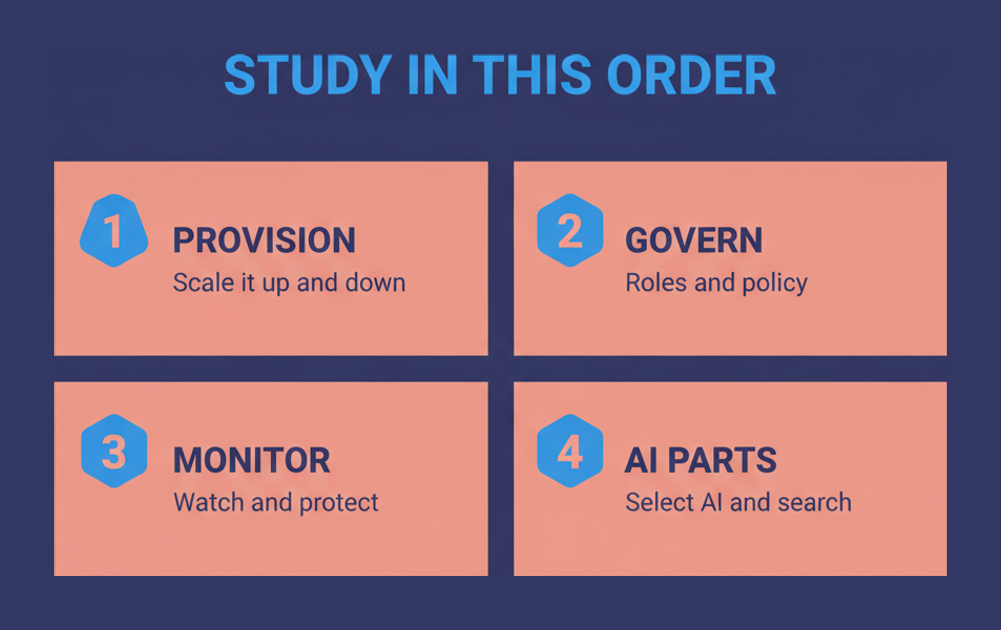
- Provision an Autonomous AI Database instance on a free tier tenancy and change its scale up and down, because the fundamentals block at 18 percent assumes you have watched that happen rather than read about it.
- Work through the dedicated deployment material next, since at another 18 percent it is the joint largest block and the resource hierarchy, governance and policy objectives are the least intuitive part of the whole blueprint.
- Spend a session on serverless resilience and business continuity, contrasting each feature against the dedicated equivalent you have just studied so the two never blur together in a question.
- Turn to performance monitoring, data protection and API automation, treating the 16 percent block as a chance to connect the operational features you have already used rather than as a fresh subject.
- Learn Select AI by configuring a profile against a schema you already understand, then asking it deliberately ambiguous questions so you can see how the profile shapes the SQL it generates.
- Read the MCP specification for one hour, learn what the Oracle server exposes and under what controls, and then stop, because the block is worth two questions.
- Finish with cataloguing, semantic search and migration together, since all three are about moving or describing data rather than operating an instance.
One habit is worth more than any resource here. Every time you finish a block, write down which of the nine it was and how many questions it is worth, because the blueprint’s uneven weighting is the single most useful planning tool the exam gives you. Candidates studying the adjacent Oracle AI database credentials use the same approach, and our 1Z0-182 administration guide covers a neighbouring exam where the AI vocabulary overlaps directly.
Frequently Asked Questions
How many questions are on the 1Z0-931-26 exam?
Fifty multiple choice questions in 90 minutes. The pass mark is 68 percent, so 34 correct answers are needed, leaving room for sixteen wrong ones across all nine domains.
What is the passing score for 1Z0-931-26?
Sixty eight percent. With 50 questions each one carries two percentage points, and because the largest domain is only 18 percent, no single weak area makes a pass arithmetically impossible.
How much does the exam cost?
USD 245, varying by country and by the local currency it is charged in. That covers the exam only and does not include training or practice material.
What is the difference between 1Z0-931-26 and earlier releases?
The credential is now Autonomous AI Database rather than Autonomous Database, and the blueprint adds a Select AI block at 8 percent, an MCP server integration block at 4 percent, and semantic search objectives inside the analytics block.
Which domain carries the most marks?
Two tie at 18 percent each: implementing Autonomous Database fundamentals, and implementing Autonomous Database dedicated deployments. Each works out at roughly nine questions of the fifty.
How much of the exam is about AI?
Around a fifth. Select AI carries 8 percent, MCP server integration 4 percent, and the semantic search objective sits inside the 14 percent unified data management and AI analytics block.
Do I need to know both serverless and dedicated deployments?
Yes, and dedicated carries more weight. Dedicated deployments are 18 percent against 12 percent for serverless architectures, and the two blocks test genuinely different objectives rather than the same ideas twice.
Is Model Context Protocol really tested?
Yes, in a 4 percent block with one objective on architecting AI to database integration using the Autonomous AI Database MCP server. At roughly two questions it rewards conceptual understanding rather than implementation detail.
What credential does passing award?
Oracle Autonomous AI Database Certified Professional. It sits at the professional tier, above Oracle’s associate level exams, and assumes working experience with the service.
Conclusion
The 1Z0-931-26 exam is the release where an Oracle product rename turned into real syllabus change. Fifty questions, 90 minutes, 68 percent and 245 US dollars, split across nine weighted blocks in which the operational material still carries 64 percent while Select AI, MCP server integration and semantic search account for roughly a fifth. Fundamentals and dedicated deployments tie as the largest blocks at 18 percent each, and the two smallest blocks are worth two questions apiece.
The plan that works follows that shape: heavy hands on time in the operational blocks, one properly understood pass through the AI material treated as a single subject, and an hour rather than a weekend on the four percent blocks. Once your own labs line up with the nine domains, a run through a practice set is the fastest way to see which of them still owes you time.


