
The Professional in Human Resources (PHR) certification, offered by HRCI (Human Resource Certification Institute) under exam code PHR, is a globally recognized credential that validates foundational knowledge and practical experience in human resource management principles. This certification is designed for HR professionals who are responsible for program implementation, tactical HR functions, and daily operational tasks rather than strategic planning or executive decision-making. Achieving the PHR designation demonstrates a comprehensive understanding of technical and operational HR practices, elevating your credibility and career trajectory within the HR field. It signifies a readiness to tackle the operational complexities of HR with a validated skill set.
Validate Your HR Expertise with PHR Certification
Earning your PHR Certification signifies a commitment to professional excellence and a mastery of essential human resources competencies. This credential serves as a benchmark for operational HR leadership, confirming your ability to apply HR policies and procedures effectively. It provides a robust foundation for those managing HR functions within an organization, ensuring compliance and best practices in everyday scenarios. The certification enhances your professional standing, making you a more attractive candidate for roles requiring proven HR capabilities.
• Enhanced Credibility: The PHR certification acts as an objective, third-party validation of your HR knowledge and skills.
• Career Advancement: Holding this credential can open doors to new opportunities, promotions, and leadership roles within the HR domain.
• Increased Earning Potential: Certified professionals often command higher salaries compared to their non-certified counterparts.
• Expanded Professional Network: Joining the ranks of HRCI-certified individuals connects you to a global community of esteemed HR professionals, including those on the HRCI community platform.
• Continuous Learning: The recertification process encourages ongoing professional development, keeping your skills current and relevant.
Examining the HRCI PHR Credential Structure
The HRCI Professional in Human Resources (PHR) exam is structured to rigorously assess a candidate’s practical understanding and application of HR principles. Understanding the format and specific details of the exam is the first critical step toward effective preparation. This overview provides a clear picture of what to expect on exam day, from duration to passing criteria, allowing candidates to strategically plan their study efforts. You can find further details on how the exams are structured directly from the source.
PHR Exam Details
The PHR exam, identified by exam code PHR, adheres to a standardized format to ensure fairness and comprehensive assessment. Candidates should familiarize themselves with these key logistical aspects before scheduling their test. This information is vital for managing expectations and preparing for the testing environment.
• Exam Name: HRCI Professional in Human Resources
• Exam Code: PHR
• Exam Price: USD $395 (Note: An additional application fee of USD $100 applies)
• Duration: 120 Minutes (plus an additional 30 minutes for administrative tasks)
• Number of Questions: 115
• Passing Score: 69%
More insights into the exam structure are available on the HRCI exam preparation resources page.
Mastering PHR Exam Content Domains
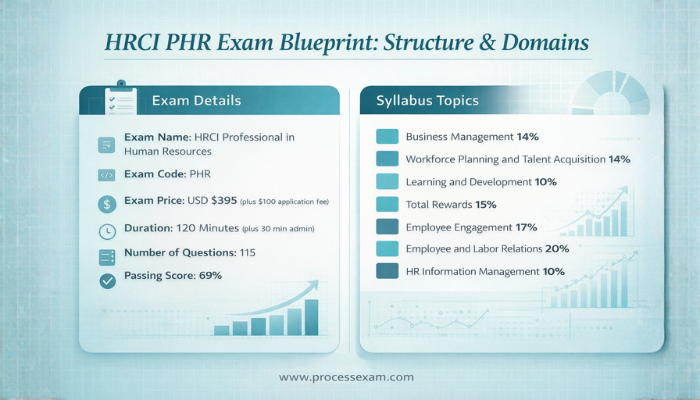
The PHR exam covers seven key functional areas of human resources, each weighted to reflect its importance in an operational HR role. A thorough understanding of these syllabus topics is crucial for comprehensive preparation and maximizing your chances of success. Each domain addresses specific responsibilities and knowledge areas that a Professional in Human Resources is expected to master. This detailed breakdown serves as your Professional in Human Resources (PHR) exam outline.
Key PHR Syllabus Topics and Weightage
Candidates must allocate their study time proportionally to the weight of each domain. This strategic approach ensures that high-impact areas receive adequate attention. Each percentage reflects the approximate number of questions you can expect from that particular content area on the exam.
• Business Management: 14% – Focuses on strategic HR concepts, organizational effectiveness, and risk management.
• Workforce Planning and Talent Acquisition: 14% – Covers job analysis, recruitment strategies, and selection processes.
• Learning and Development: 10% – Explores training needs assessment, program design, and career development initiatives.
• Total Rewards: 15% – Encompasses compensation, benefits, and recognition programs.
• Employee Engagement: 17% – Addresses employee motivation, satisfaction, and retention strategies.
• Employee and Labor Relations: 20% – Deals with employee rights, disciplinary actions, grievances, and collective bargaining.
• HR Information Management (HRIM): 10% – Focuses on HR technology, data management, and security.
Crafting an Effective PHR Study Blueprint
Developing a structured and realistic study plan is paramount for success in the HRCI PHR exam. A well-thought-out blueprint helps organize your time, identify your strengths and weaknesses, and ensure comprehensive coverage of all syllabus topics. This proactive approach minimizes stress and optimizes learning efficiency, setting a clear path toward passing the HRCI PHR exam.
Developing Your Study Strategy
Effective preparation goes beyond simply reading textbooks; it involves active learning, self-assessment, and strategic resource utilization. Consider these proven strategies as you build your personalized HRCI PHR study guide.
• Self-Assessment: Begin by taking a diagnostic test to identify areas where your knowledge is strong and where it needs improvement.
• Resource Gathering: Collect official HRCI study materials, recommended textbooks, and reliable online resources.
• Time Management: Create a detailed study schedule that allocates specific time slots for each domain, factoring in regular breaks.
• Active Learning Techniques: Employ methods like flashcards, summary notes, and teaching concepts to others to reinforce understanding.
• Study Groups: Consider joining a study group to discuss complex topics and gain different perspectives. The HRCI community can be a great place to find peers.
Leveraging Professional in Human Resources Practice Exams
Integrating practice exams into your study routine is a critical component of successful PHR preparation. These simulated tests not only assess your knowledge but also acclimate you to the exam format, question styles, and time constraints. Utilizing a Professional in Human Resources (PHR) practice exam effectively can significantly boost your confidence and readiness for the actual certification test, helping you identify areas for further review.
Benefits of Practice Assessments
Practice exams offer more than just a score; they provide invaluable insights into your test-taking abilities and knowledge gaps. Regularly taking these assessments allows for continuous improvement and refinement of your study focus.
Many platforms offer specific practice resources; for instance, you can explore HRCI Professional in Human Resources practice questions to gauge your readiness.
• Identify Weaknesses: Pinpoint specific syllabus areas where your understanding is lacking and requires more attention.
• Time Management Practice: Learn to pace yourself effectively, ensuring you can answer all questions within the allotted time.
• Familiarity with Format: Become comfortable with the question types, interface, and overall structure of the HRCI PHR exam.
• Reduce Exam Anxiety: Repeated exposure to exam-like conditions can significantly lower stress levels on the actual test day.
• Reinforce Learning: Reviewing incorrect answers helps solidify your understanding of the correct concepts and principles.
Understanding PHR Certification Eligibility
Before embarking on your PHR certification journey, it is essential to thoroughly review and meet the specific eligibility criteria established by HRCI. These requirements ensure that candidates possess the foundational experience and education necessary to perform effectively in an operational HR role. Understanding HRCI PHR certification requirements precisely will prevent any unexpected hurdles in your application process.
PHR Eligibility Criteria
The HRCI defines clear pathways to eligibility, typically based on a combination of professional HR experience and formal education. Meeting these standards is a non-negotiable step toward scheduling your exam.
• Master’s Degree or Higher: Requires 1 year of professional HR experience.
• Bachelor’s Degree: Requires 2 years of professional HR experience.
• Less Than a Bachelor’s Degree: Requires 4 years of professional HR experience.
All experience must be in a professional-level HR position, involving activities at the operational and tactical levels. Candidates should carefully document their experience to ensure it aligns with these guidelines.
Evaluating the PHR Investment: Cost and Value
Considering the financial outlay for the HRCI PHR certification is a crucial part of your strategic planning. Beyond the direct HRCI PHR exam cost, understanding the potential return on investment (ROI) is key to assessing if the PHR certification is worth it for your career goals. This evaluation helps you weigh the benefits against the expenses and reinforces the long-term value of the credential.
Financial Considerations and ROI
The cost of the exam is a direct expense, but the potential gains in salary, job opportunities, and professional development often outweigh this initial investment. Analyzing these factors provides a complete picture of the certification’s worth.
• Exam Fees: As mentioned, the exam costs USD $395, with an additional USD $100 application fee.
• Study Materials: Budget for study guides, practice exams, and potentially an HRCI PHR online course or other best HRCI PHR study materials.
• Average Salary Increase: Many studies indicate that certified HR professionals, especially those with an average salary with HRCI PHR certification, can see a significant boost in their annual earnings.
• Career Mobility: The certification can lead to quicker advancement and access to more specialized or senior operational HR roles.
• Job Security: Holding a recognized credential can enhance your job security and marketability in a competitive HR landscape.
Advancing Your Career: PHR Benefits and Salary Prospects
The Professional in Human Resources (PHR) certification serves as a powerful catalyst for career progression, opening doors to enhanced responsibilities and increased earning potential. Beyond validating your skills, it signals to employers a proactive approach to professional development and a deep understanding of HR operational best practices. Exploring HRCI PHR jobs and salary expectations can illuminate the tangible benefits of this strategic credential.
Tangible Career Advantages
The benefits of HRCI PHR certification extend beyond personal satisfaction, translating into concrete professional advantages that can shape your career trajectory for years to come.
HRCI also offers digital badges for certified professionals, which can be shared on professional networking sites to showcase your achievement.
• Market Competitiveness: Stand out in a crowded job market, demonstrating a verified skill set that employers seek.
• Expanded Role Opportunities: Qualify for a broader range of operational HR roles that specifically require or prefer PHR certification.
• Leadership Readiness: Develop the foundational knowledge necessary for taking on more supervisory and leadership responsibilities within an HR department.
• Networking Prowess: Connect with a global network of HR leaders and practitioners, fostering collaboration and mentorship opportunities.
• Increased Influence: Gain the confidence and expertise to contribute more strategically to HR initiatives within your organization.
Sustaining Your Credential: Renewing HRCI PHR Certification
Maintaining the validity of your PHR certification is crucial for continued professional recognition and career growth. The HRCI mandates a recertification process, ensuring that certified professionals remain current with evolving HR trends, laws, and best practices. Understanding the requirements for renewing HRCI PHR certification is vital to keep your designation active and continue to leverage its benefits.
Recertification Pathways
HRCI offers several avenues for recertification, primarily centered around accumulating professional development credits over a three-year period. Planning for these activities proactively is key.
• Professional Development: Earn 60 recertification credits through activities like continuing education courses, speaking engagements, or professional memberships.
• Retake the Exam: As an alternative, you can opt to retake the PHR exam before your recertification cycle ends.
• Ethics and Professionalism: Ensure your professional conduct aligns with HRCI’s ethical standards throughout your certification period.
It is advisable to track your professional development activities diligently to ensure you meet the credit requirements well in advance of your recertification deadline.
Comparing PHR vs SPHR: Strategic Career Choices
For HR professionals considering advanced certification, distinguishing between the PHR (Professional in Human Resources) and SPHR (Senior Professional in Human Resources) certifications is a critical decision. While both are offered by HRCI, they target different career stages and levels of HR responsibility. A clear understanding of PHR vs SPHR certification helps align your choice with your career aspirations and current professional experience.
Key Differences Between PHR and SPHR
The primary distinction lies in the focus: operational versus strategic. PHR validates tactical, implementation-focused knowledge, whereas SPHR targets strategic, policy-making, and leadership capabilities.
• Target Audience: PHR is for HR professionals with experience in implementing programs and tactical responsibilities. SPHR is for senior-level HR professionals who design HR policies and strategies.
• Focus: PHR focuses on operational and technical aspects of HR. SPHR emphasizes strategic HR management, policy development, and global HR issues.
• Experience Level: PHR generally requires less overall experience, focusing on operational execution. SPHR demands more extensive senior-level HR experience in strategic roles.
• Exam Content: The PHR exam concentrates on the “how-to” of HR. The SPHR exam delves into the “why” and strategic implications of HR decisions.
Choosing between the two depends on your current role, career goals, and the depth of your strategic HR experience.
Approaching the HRCI PHR Exam Difficulty
Assessing the HRCI PHR exam difficulty level realistically is an important step in setting appropriate study goals and managing expectations. While challenging, the exam is passable with diligent preparation and a strategic approach to learning. Factors such as prior HR experience, study habits, and familiarity with the exam format can all influence a candidate’s perception of its difficulty.
Factors Influencing Exam Challenge
The PHR exam tests comprehensive knowledge across multiple HR domains, requiring more than just memorization. Success hinges on understanding how to apply HR principles in practical scenarios.
• Breadth of Knowledge: The exam covers a wide range of HR functions, demanding a solid understanding across all seven domains.
• Application-Based Questions: Many questions are scenario-based, requiring candidates to apply their knowledge to real-world HR situations rather than simply recalling facts.
• Time Pressure: Managing 115 questions in 120 minutes requires effective time management and quick decision-making.
• Conceptual Understanding: A deep grasp of HR concepts, not just surface-level memorization, is essential for tackling complex questions.
With focused preparation and consistent effort, the perceived difficulty can be effectively managed.
Selecting the Best HRCI PHR Study Materials
Choosing the right study materials is fundamental to building a strong foundation for the HRCI PHR exam. A combination of official resources, reputable third-party guides, and interactive learning tools can significantly enhance your understanding and retention of complex HR concepts. Investing in the best HRCI PHR study materials ensures that your preparation is comprehensive and aligned with the exam’s objectives.
Effective Study Resource Categories
A diversified approach to study resources can cater to different learning styles and reinforce knowledge from various perspectives. Consider incorporating a mix of these materials into your study plan.
• Official HRCI Resources: Utilize study guides, handbooks, and suggested reading lists provided directly by HRCI to ensure alignment with exam content.
• Comprehensive Textbooks: Invest in up-to-date HR management textbooks that cover all PHR syllabus domains in depth.
• Online Courses: An HRCI PHR online course can offer structured learning paths, video lectures, and interactive exercises to clarify complex topics.
• Practice Question Banks: Access extensive question banks from reputable providers to practice applying your knowledge under timed conditions.
• Flashcards and Mobile Apps: These tools are excellent for on-the-go review and memorization of key terms, definitions, and legal provisions.
Conclusion: Charting Your Course to HR Leadership
The PHR Certification represents a strategic milestone for HR professionals aiming to solidify their operational expertise and advance their careers. It is more than just a credential; it is a blueprint for continuous learning, ethical practice, and tangible career growth within the dynamic field of human resources. By committing to this certification, you not only elevate your own professional standing but also contribute to the higher standards of the HR profession as a whole.
Are you ready to elevate your HR career and validate your foundational knowledge in human resources? The journey to becoming a Professional in Human Resources is a challenging yet highly rewarding path. Begin crafting your personalized study plan today and explore resources that can further support your professional development.
Frequently Asked Questions
1. What does PHR certification stand for?
PHR stands for Professional in Human Resources. It is a certification offered by the HRCI (Human Resource Certification Institute) that validates an HR professional’s mastery of the technical and operational aspects of HR practices.
2. How long is the PHR certification valid?
The PHR certification is valid for three years. To maintain the credential, professionals must recertify by earning 60 professional development credits or by retaking the exam before their recertification cycle ends.
3. Is the PHR exam difficult?
The HRCI PHR exam is considered challenging due to its comprehensive coverage of HR domains and its focus on application-based questions. Success requires diligent study, practical experience, and effective test-taking strategies.
4. What is the difference between PHR and SPHR?
The PHR certification is designed for HR professionals with operational and tactical responsibilities, focusing on implementation. The SPHR (Senior Professional in Human Resources) is for senior-level professionals who are involved in strategic planning and policy development.
5. What are the eligibility requirements for the PHR certification?
Eligibility typically depends on your highest degree: a Master’s degree requires 1 year of professional HR experience, a Bachelor’s degree requires 2 years, and less than a Bachelor’s degree requires 4 years of professional HR experience.


