Clinical Trials Programming Using SAS 9.4, embodied by the SAS A00-282 certification, represents a critical credential for professionals aspiring to excel in clinical research. This validation from SAS, a leader in analytics software, confirms an individual’s proficiency in applying SAS programming skills to manage, analyze, and report clinical trial data, ensuring regulatory compliance and data integrity. Professionals pursuing this certification are typically data analysts, statisticians, or programmers keen on specializing in the pharmaceutical, biotechnology, or medical device industries. This comprehensive article delves into the significance of the A00-282 exam, outlines its core content, explores career growth opportunities, and provides a strategic roadmap for achieving this esteemed certification, charting a clear path beyond the initial exam to a fulfilling career arc in clinical data science.
Validating Expertise: The A00-282 Credential
Achieving the SAS A00-282 certification signifies a professional’s verified competence in SAS programming specifically tailored for clinical trials. This credential demonstrates a deep understanding of the methodologies and regulatory requirements essential for processing and analyzing clinical study data, making certified individuals highly sought after in the life sciences sector. It validates the ability to handle complex datasets, ensure data quality, and produce reliable reports crucial for drug development and regulatory submissions.
The certification’s focus on SAS 9.4, a widely used version in the industry, ensures that candidates possess current and relevant technical skills. For those looking to solidify their standing in the competitive clinical research landscape, the A00-282 serves as a robust benchmark of their capabilities. Further details about the exam’s objectives and structure can be found on the official SAS certification page. SAS also certifies the visualisation side, and the SAS report building exam shows how its marks are distributed.
Examining the A00-282 Certification Structure
The Clinical Trials Programming Using SAS 9.4 (A00-282) exam is designed to rigorously assess a candidate’s practical skills and theoretical knowledge in a time-bound, professional setting. Understanding its format is crucial for effective preparation and managing exam-day expectations. This detailed overview provides a transparent look at what candidates will encounter.
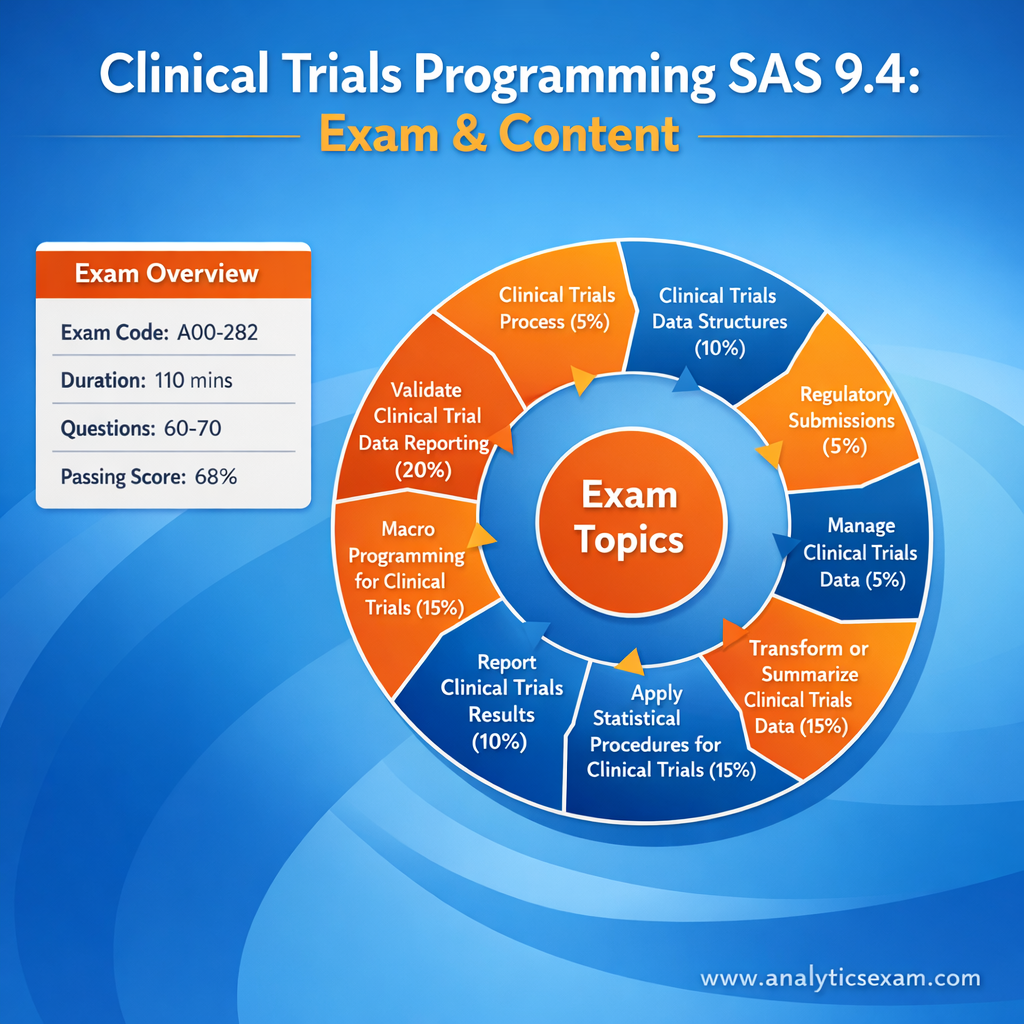
Candidates must manage their time effectively to address all questions within the allotted duration, showcasing not only their SAS programming prowess but also their ability to perform under pressure. The passing score of 68% emphasizes the need for a thorough and comprehensive study approach across all tested domains.
Mastering Clinical Data Domains: The Syllabus for A00-282
The SAS A00-282 syllabus covers a broad spectrum of topics, ensuring that certified professionals are well-versed in every phase of clinical trial data management and analysis using SAS 9.4. Each domain carries a specific weight, guiding candidates on where to allocate their study efforts. A deep dive into these areas is essential for success.
Core Competencies by Weightage:
- Clinical Trials Process (5%): Grasping the overall lifecycle of clinical trials, from protocol design to study closure, understanding the context in which programming tasks are performed.
- Clinical Trials Data Structures (10%): Proficiency in recognizing and working with standard clinical data models like SDTM (Study Data Tabulation Model) and ADaM (Analysis Data Model), which are fundamental for data submission and analysis.
- Regulatory Submissions (5%): Knowledge of the regulatory landscape, including FDA and ICH guidelines, and how SAS programming supports compliance in submitting data and reports.
- Manage Clinical Trials Data (5%): Skills in importing, cleaning, merging, and subsetting clinical data to prepare it for analysis, ensuring data integrity and consistency.
- Transform or Summarize Clinical Trials Data (15%): Applying SAS procedures to aggregate, transpose, and summarize raw data into meaningful formats suitable for statistical analysis and reporting.
- Apply Statistical Procedures for Clinical Trials (15%): Using SAS STAT procedures to perform common statistical analyses relevant to clinical research, interpreting the outputs correctly.
- Macro Programming for Clinical Trials (15%): Developing and utilizing SAS macros to automate repetitive tasks, enhance efficiency, and ensure consistency in programming across studies.
- Report Clinical Trials Results (10%): Generating accurate and submission-ready tables, listings, and figures (TLFs) using SAS Output Delivery System (ODS) and other reporting tools.
- Validate Clinical Trial Data Reporting (20%): The most heavily weighted section, focusing on quality control processes, independent validation, and documentation to ensure the accuracy and reliability of all generated outputs.
This structured approach to the syllabus ensures that candidates develop a holistic understanding of SAS programming within the clinical trial context. For a more detailed breakdown of each objective, candidates can refer to the detailed exam syllabus.
Elevating Clinical Trials Programming Careers
A SAS Clinical Trials Programming certification opens doors to diverse and impactful roles within the pharmaceutical, biotech, and contract research organization (CRO) sectors. Beyond basic programming, it signifies a specialist capable of navigating the stringent requirements of clinical data. The demand for skilled professionals who can ensure data quality, regulatory compliance, and efficient analysis continues to grow, translating into robust career prospects and competitive compensation.
Key Career Trajectories:
- Clinical SAS Programmer: Responsible for developing and validating SAS programs to create datasets, tables, listings, and figures for clinical trial reports and regulatory submissions.
- Senior Clinical Programmer: Leads programming activities for specific studies or programs, mentors junior programmers, and contributes to study design and documentation.
- Principal Clinical Programmer: Often involved in strategic planning, process improvement, and complex programming challenges, sometimes overseeing multiple studies or teams.
- Statistical Programmer: Works closely with statisticians to implement statistical analysis plans, generating derived datasets and statistical outputs.
- Data Standards Specialist: Focuses on implementing and maintaining industry standards like SDTM and ADaM within SAS environments.
The salary for SAS Clinical Trials Programming professionals varies based on experience, location, and specific role, but generally ranges from entry-level to highly competitive for experienced individuals. Continuous learning and networking through platforms like professional SAS groups significantly contribute to career advancement.
Essential Skills for SAS Clinical Trials Programmers
Proficiency in SAS Clinical Trials Programming goes beyond mere syntax; it encompasses a blend of technical expertise, domain knowledge, and meticulous attention to detail. This certification specifically validates a suite of skills critical for successful contributions to clinical research. Developing these competencies is paramount for both passing the A00-282 exam and excelling in the field.
Core Skills Validated by A00-282:
- Advanced SAS DATA Step Programming: Mastering data manipulation techniques, including merging, transposing, and summarizing complex datasets.
- SAS Macro Language Proficiency: Ability to write efficient and reusable macros to automate tasks, ensuring consistency and reducing errors in programming.
- SDTM and ADaM Implementation: Deep understanding of CDISC standards for submitting clinical trial data, including creating, validating, and documenting SDTM and ADaM datasets.
- Statistical Procedure Application: Competence in using SAS procedures (e.g., PROC MEANS, PROC FREQ, PROC GLM, PROC TTEST) to generate statistical summaries and analyses required for clinical reports.
- Reporting and Visualization: Expertise in generating high-quality tables, listings, and figures (TLFs) using SAS ODS, including customization and formatting for regulatory submission.
- Data Validation and Quality Control: Meticulous skills in reviewing and validating SAS programs and outputs to ensure accuracy, completeness, and adherence to protocols and regulatory guidelines.
- Clinical Domain Knowledge: A foundational understanding of clinical trial phases, processes, and relevant regulatory guidelines (e.g., ICH GCP, FDA) to contextualize programming tasks.
These SAS 9.4 Clinical Trials Programming skills are not just theoretical; they are directly applicable to daily tasks in clinical research, making certified professionals indispensable. To further enhance these capabilities and explore other related credentials, candidates can explore SAS certifications that align with their career aspirations.
Crafting a Strategic Preparation Approach
Success on the A00-282 exam demands a well-structured and disciplined study plan. Simply reviewing materials is often insufficient; candidates must engage with the content, practice consistently, and simulate the exam environment. A holistic approach that integrates various learning methods is key to mastering the complex topics covered.
Essential Preparation Steps:
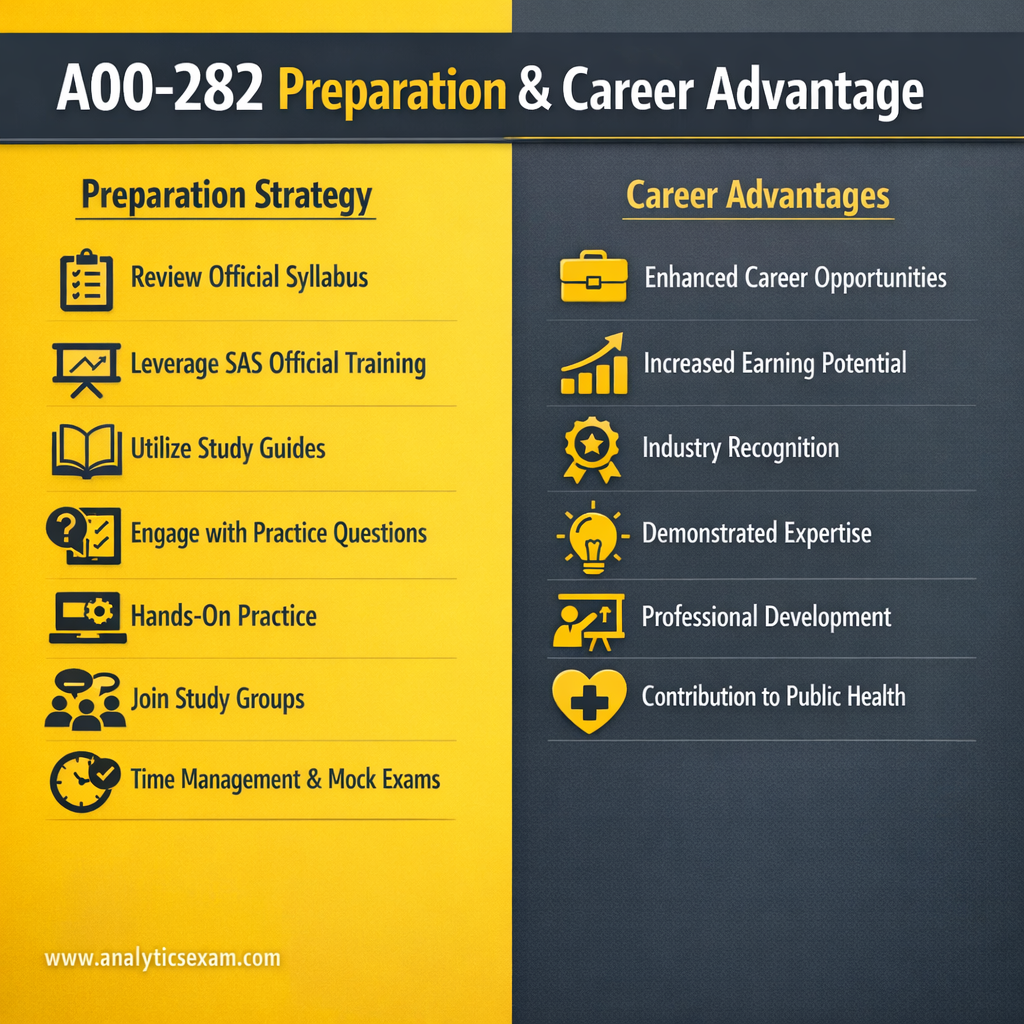
- Review Official Syllabus and Objectives: Begin by thoroughly understanding the SAS A00-282 exam objectives and the weightage of each syllabus topic. This allows for focused study and resource allocation, ensuring no critical area is overlooked.
- Leverage SAS Official Training: SAS offers specialized courses designed to prepare candidates for their certifications. These courses often include hands-on exercises and real-world scenarios, directly addressing the exam’s practical components.
- Utilize Study Guides and Books: Invest in reputable study materials that align with SAS 9.4 and clinical trials programming. Books like “Clinical Trials Reporting Using SAS” or “Statistical Programming in SAS” can provide in-depth knowledge and examples.
- Engage with Practice Questions: Regularly test your understanding with SAS Clinical Trials Programming practice questions. This helps in identifying weak areas, familiarizing yourself with question formats, and improving time management. Platforms like AnalyticsExam offer practice questions to gauge readiness.
- Hands-On Practice: Actual coding practice is irreplaceable. Work with clinical trial-like datasets to apply SAS DATA steps, PROCs, and macros. Simulate common clinical reporting tasks to build confidence and problem-solving skills.
- Join Study Groups and Communities: Collaborating with peers can provide different perspectives, clarify doubts, and keep motivation high. Online forums and SAS user communities are excellent resources for shared learning.
- Time Management and Mock Exams: Practice taking full-length mock exams under timed conditions. This helps in understanding the pacing required for the 110-minute exam and reduces anxiety on the actual test day.
Consistent effort and a multi-faceted preparation strategy will significantly improve the chances of passing the SAS Clinical Trials Programming exam, transforming complex syllabus items into actionable knowledge.
Realizing the Advantages of SAS Certification
Beyond personal achievement, the SAS Clinical Trials Programming certification offers tangible benefits that profoundly impact a professional’s career trajectory and market value. It serves as a testament to specialized skills in a niche, high-demand sector, distinguishing certified individuals in a competitive job market. The investment in time and resources for the A00-282 exam yields substantial returns in terms of career growth, credibility, and earning potential.
Key Benefits of SAS A00-282:
- Enhanced Career Opportunities: Certified professionals are often prioritized for roles in pharmaceutical companies, CROs, and academic research institutions, given their validated expertise in critical areas of clinical data analysis.
- Increased Earning Potential: The specialized nature of clinical trials programming with SAS commands a higher salary compared to general programming roles. Certification often translates directly into better compensation packages.
- Industry Recognition and Credibility: SAS is a leading analytical tool in the life sciences. Holding an official SAS certification confers instant recognition and professional credibility among peers and employers globally.
- Demonstrated Expertise: The certification officially confirms a deep understanding of CDISC standards (SDTM, ADaM), regulatory requirements, and advanced SAS programming techniques essential for clinical research.
- Professional Development: The rigorous preparation process itself leads to significant skill enhancement, keeping professionals updated with the latest industry practices and SAS capabilities relevant to clinical data.
- Contribution to Public Health: Working with clinical trial data directly contributes to the development of new treatments and therapies, offering a sense of purpose and impact beyond a typical tech role.
The strategic value of this certification extends beyond individual gain, contributing to the broader data integrity and efficacy of drug development processes. Staying informed on industry trends, including those discussed in big data discussions, can further amplify these benefits.
Conclusion
The SAS A00-282 certification, Clinical Trials Programming Using SAS 9.4, is more than just an exam; it is a gateway to a specialized and rewarding career in clinical research. It rigorously validates a unique blend of SAS programming expertise, clinical domain knowledge, and an unwavering commitment to data quality and regulatory compliance. As the pharmaceutical and biotechnology industries continue to rely heavily on robust data analysis for drug development and patient safety, the demand for certified SAS clinical programmers will only intensify.
Embarking on this certification journey equips professionals with the critical skills needed to contribute meaningfully to public health and scientific advancement. By diligently preparing for the A00-282 exam and continuously building upon this foundational credential, individuals can forge a distinguished and impactful career path, driving innovation and ensuring integrity in clinical data. Don’t just meet industry standards exceed them. Take the next step in advancing your expertise with a structured preparation guide that can help you navigate your certification journey.
Frequently Asked Questions
1. What is the SAS A00-282 certification?
The SAS A00-282 certification, officially “Clinical Trials Programming Using SAS 9.4,” validates a professional’s ability to apply SAS programming for managing, analyzing, and reporting clinical trial data in compliance with regulatory standards.
2. Who should pursue the SAS Clinical Trials Programming certification?
This certification is ideal for SAS programmers, data analysts, statisticians, and IT professionals working or aspiring to work in pharmaceutical, biotechnology, medical device, or clinical research organizations, focusing on clinical trial data.
3. What is the cost of the SAS A00-282 exam?
The SAS A00-282 exam typically costs $180 USD, though pricing may vary by region or testing center. It’s always best to check the official SAS certification website for the most current pricing.
4. How difficult is the A00-282 exam, and what is the passing score?
The A00-282 exam is considered challenging due to its breadth and depth of technical and domain-specific knowledge. It comprises 60-70 questions, and a passing score of 68% is required, emphasizing thorough preparation across all syllabus topics.
5. What are the career benefits of obtaining this certification?
Benefits include enhanced career opportunities in clinical research, increased earning potential, greater industry recognition, demonstrated expertise in CDISC standards and regulatory compliance, and a strong foundation for professional growth in specialized SAS programming roles.


