
The JNCIS-DevOps certification, identified by exam code JN0-423, establishes an individual’s proficiency in automating network operations and implementing DevOps practices within Juniper environments. This specialized credential validates a Juniper professional’s ability to leverage modern automation tools and methodologies to streamline network management, enhance efficiency, and accelerate service delivery. This comprehensive article provides a strategic roadmap for Juniper experts aiming to achieve this advanced certification, covering exam objectives, essential study materials, and effective preparation strategies to ensure success in this demanding but highly rewarding domain.
Validating Automation and DevOps Expertise: JN0-423 Exam Overview
The JNCIS-DevOps certification, officially known as the Juniper Networks Certified Internet Specialist, Automation and DevOps, serves as a critical benchmark for network professionals transitioning into or specializing in automated infrastructure management. It validates a candidate’s practical skills in applying automation frameworks and scripting languages to Juniper platforms. The JN0-423 exam, also termed the Automation and DevOps Specialist exam, measures a candidate’s understanding of key concepts and tools necessary for efficient, programmatic network control. It sits at the same specialist level as the data centre exam, and the JNCIS-DC objectives shows how the two differ in scope.
Exam Structure and Essential Details
Understanding the foundational structure of the JN0-423 exam is the first step in effective preparation. This exam is designed to rigorously test a candidate’s real-world capabilities rather than just theoretical knowledge. Successful candidates demonstrate a deep comprehension of automation principles and their practical implementation on Juniper devices.
- Exam Name: Automation and DevOps Specialist
- Exam Code: JN0-423
- Exam Price: $300 USD
- Duration: 90 minutes
- Number of Questions: 65
- Passing Score: Variable (typically 60-70% Approx.)
The variable passing score indicates that the difficulty of questions can fluctuate, requiring candidates to perform consistently across all tested domains. A 90-minute duration for 65 questions means candidates must manage their time effectively, quickly assessing and answering each item. For more specific details, candidates should always refer to the official certification page.
Architecting Modern Juniper Networks: The JNCIS-DevOps Syllabus
The JNCIS-DevOps exam topics are meticulously curated to ensure candidates possess a holistic understanding of automation principles applicable to Juniper networks. The syllabus covers a range of technologies, from overarching platform automation concepts to specific tools and scripting languages. Mastering these areas is crucial for any professional looking to excel in a DevOps-centric networking role.
Core Domains and Key Technologies
The JN0-423 exam syllabus spans several critical areas, each designed to build a comprehensive skill set. Candidates must not only understand individual components but also how they integrate within a broader automation strategy.
- Platform Automation Overview: This section introduces the fundamental concepts of network automation, including benefits, challenges, and the various approaches to automating network tasks on Juniper platforms. It sets the stage for understanding why and how automation is applied in modern network infrastructures.
- gRPC: Candidates are expected to comprehend gRPC (Google Remote Procedure Call), a high-performance, open-source universal RPC framework. Its application in network programmability and its role in modern automation solutions are vital for the exam.
- Ansible: A significant portion of the exam focuses on Ansible, a powerful open-source automation engine. This includes understanding Ansible playbooks, modules, roles, and how to use them for configuring and managing Juniper devices. Proficiency in writing and executing Ansible automation tasks is key.
- Junos Automation Scripts: This covers the specifics of scripting directly on Junos OS, including commit scripts, event scripts, op scripts, and SNMP scripts. Candidates should be familiar with the various types of Junos scripts and their use cases for operational automation and customization.
- YANG: The exam requires knowledge of YANG (Yet Another Next Generation), a data modeling language used to model configuration and state data, remote procedure calls, and notifications for network devices. Understanding how YANG models enable programmatic configuration and data retrieval is fundamental.
Each of these JNCIS-DevOps exam topics represents a pillar of modern network automation. Candidates should not merely memorize definitions but aim for practical proficiency. Exploring the official Juniper documentation can provide deeper insights into these technologies and their real-world applications.
Realizing Career Growth with JNCIS-DevOps
Earning the JNCIS-DevOps certification significantly enhances a professional’s career trajectory within the networking and IT automation landscape. This credential demonstrates a specialized skill set highly valued by organizations striving for agility and efficiency in their infrastructure operations. It positions certified individuals as key contributors in environments embracing both network engineering and software development principles.
Professional Benefits and Industry Recognition
The demand for network professionals who can bridge the gap between traditional networking and modern DevOps practices is rapidly increasing. The Juniper Automation and DevOps Specialist exam guide highlights the relevance of these skills in today’s dynamic IT ecosystem.
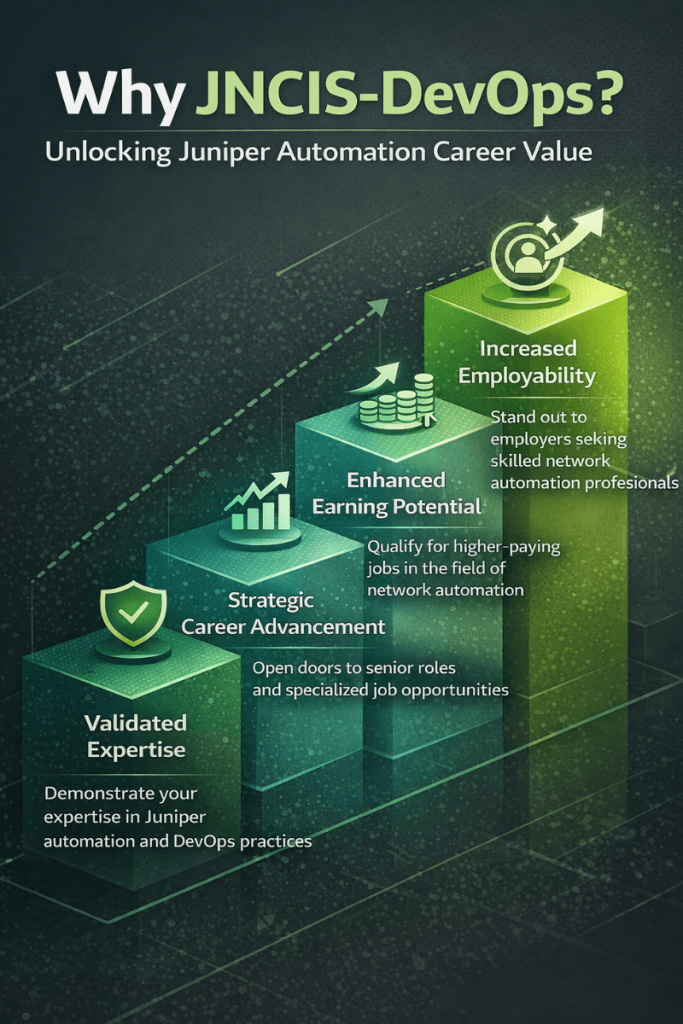
- Increased Employability: Organizations actively seek candidates proficient in automation, making JNCIS-DevOps holders highly desirable for roles like Network Automation Engineer, DevOps Engineer (Networking Focus), or Infrastructure as Code Specialist.
- Enhanced Earning Potential: Professionals with specialized automation skills, particularly on vendor-specific platforms like Juniper, often command higher salaries. The JNCIS-DevOps salary typically reflects the critical value these skills bring to an organization.
- Strategic Career Advancement: This certification is a natural progression for Juniper network engineers, opening doors to more architect-level or leadership positions that involve designing and implementing automated network solutions.
- Validated Expertise: It serves as official recognition of a candidate’s ability to automate, program, and integrate Juniper devices, proving readiness for complex, production-level environments.
The JNCIS-DevOps is more than just a certificate; it’s a testament to a forward-thinking approach to network management. It allows professionals to contribute to significant operational improvements, reducing manual errors and accelerating deployment cycles.
Strategic Blueprint for JN0-423 Exam Preparation
Successfully passing the Juniper JN0-423 exam requires a well-structured and disciplined preparation strategy. It’s not enough to merely review the syllabus; candidates must engage with the material practically and systematically. A robust study plan will integrate theoretical understanding with hands-on experience, ensuring readiness for the diverse question formats and technical challenges presented.

Essential Study Material and Resources
The journey to JNCIS-DevOps certification involves leveraging a variety of high-quality JN0-423 study material. Relying solely on one resource can lead to gaps in knowledge, so a multi-faceted approach is highly recommended.
- Official Juniper Training Courses: Juniper offers dedicated training courses like “Junos Automation and DevOps Fundamentals” that align directly with the exam objectives. These courses often provide structured learning paths and practical lab exercises. Juniper learning resources can be found through platforms like the Juniper Learning Portal.
- Documentation and Whitepapers: The official Juniper documentation for Junos OS, gRPC, Ansible modules for Junos, and YANG models are indispensable. These resources offer the most accurate and up-to-date information directly from the vendor.
- Practice Labs and Sandbox Environments: Hands-on experience is paramount. Setting up virtual labs with Junos OS devices, experimenting with Ansible playbooks, and writing custom Junos automation scripts are critical for solidifying understanding. Using Juniper’s vMX or vQFX can simulate real-world scenarios.
- Study Groups and Forums: Engaging with a community of peers can provide valuable insights, alternative perspectives, and solutions to common challenges. Discussing JN0-423 exam objectives with others helps reinforce learning.
- Reputable Online Resources: Numerous blogs, YouTube channels, and technical articles offer supplementary explanations and practical examples of Juniper automation and DevOps concepts.
Crafting an Effective Study Plan
A tailored study plan ensures comprehensive coverage of all JNCIS-DevOps exam topics and helps manage study time efficiently.
- Assess Current Knowledge: Start by identifying your strengths and weaknesses across the syllabus domains. This allows you to allocate more time to areas requiring improvement.
- Create a Schedule: Dedicate consistent study blocks, ensuring a balance between theoretical learning and practical application. Break down complex topics into manageable chunks.
- Hands-On Practice: Integrate lab time regularly. This exam is highly practical, so direct experience with configuring Juniper devices using automation tools is crucial.
- Review and Reinforce: Regularly review previously studied material to prevent knowledge decay. Use flashcards, quizzes, or self-explanation techniques.
- Simulate Exam Conditions: As you near the exam date, practice answering Juniper JN0-423 exam questions under timed conditions. This helps build endurance and familiarity with the exam format.
Applying Juniper Automation for DevOps Roles
The JNCIS-DevOps certification is designed for professionals who manage Juniper networks and wish to implement DevOps principles for greater agility and reliability. This involves not just knowing the tools but understanding how to apply them to solve real-world operational challenges. The certification validates the ability to integrate network automation seamlessly into broader CI/CD pipelines and infrastructure-as-code practices.
Key Automation Tools and Practices
Professionals seeking this certification must be adept at using specific Juniper automation tools for DevOps to optimize network operations. This practical application forms a core part of the exam’s focus.
Orchestration with Ansible: Leveraging Ansible for comprehensive network orchestration, from initial device provisioning to ongoing configuration management and software upgrades. This includes developing reusable Ansible roles and playbooks.
- Data Modeling with YANG: Utilizing YANG models for standardized configuration, enabling predictable and repeatable automation outcomes across different Juniper platforms. This ensures consistency and reduces configuration drift.
- API-Driven Interactions: Working with gRPC and other APIs (Application Programming Interfaces) to interact programmatically with Junos OS devices, allowing for dynamic control and integration with external systems.
- Scripting for Customization: Developing custom Junos automation scripts (e.g., commit scripts for policy enforcement, event scripts for automated responses) to extend native functionality and address specific operational needs.
These practices move beyond simple scripting to encompass a holistic approach to network management, where networks are treated as code and changes are deployed systematically and automatically. This is fundamental to what is JNCIS-DevOps certification truly about.
Cultivating Exam Readiness: Ethical Study Practices
Achieving JNCIS-DevOps success hinges on commitment to ethical and effective study methods. The goal is to build genuine expertise, not merely to pass an exam. Responsible preparation ensures that certified individuals possess the knowledge and skills truly needed to perform effectively in real-world DevOps roles. Avoidance of unethical practices, such as using “exam dumps,” is crucial not only for integrity but also for long-term career credibility.
Building Genuine Expertise and Readiness
True JNCIS-DevOps certification cost includes the investment of time and effort into comprehensive study. This investment pays off through deep understanding and confidence in applying automation skills.
- Conceptual Understanding: Focus on understanding the “why” behind each technology and concept, not just the “how.” This enables problem-solving beyond memorized commands.
- Practical Proficiency: Spend considerable time in lab environments, ensuring you can implement the automation tasks described in the syllabus. Practical application solidifies theoretical knowledge.
- Regular Self-Assessment: Utilize best JNCIS-DevOps practice tests from reputable sources to gauge your readiness. These tests should challenge your understanding and highlight areas for further study, rather than simply providing answers.
- Ethical Preparation: Always adhere to Juniper’s certification program policies. Rely on official documentation, training, and legitimate practice resources. Engaging with unethical “exam dumps” undermines the value of your Juniper certification and risks program violations.
By focusing on genuine learning, candidates not only prepare to how to pass JNCIS-DevOps exam but also develop the robust skill set that organizations expect from a Juniper Automation and DevOps Specialist. Quality practice questions, like those found on sample questions and answers, can be invaluable for identifying knowledge gaps and improving exam-taking strategies.
Conclusion
The JNCIS-DevOps: The 2024 Blueprint for Juniper Experts outlines a clear path for professionals seeking to master automation and DevOps practices within Juniper networks. This certification is a powerful validator of skills crucial for modern network operations, enabling individuals to drive efficiency, innovation, and strategic value in their organizations. By adhering to a structured study plan, engaging with hands-on labs, and utilizing ethical study resources, candidates can confidently approach the JN0-423 exam and unlock significant career opportunities.
Embrace the challenge of the JN0-423 exam and solidify your expertise in network automation. Start building your strategic study plan today to join the ranks of Juniper’s certified automation specialists. For further exploration of Juniper’s comprehensive certification offerings and to begin your journey, visit our dedicated resources on Juniper certification paths. Equip yourself with the knowledge and credentials that define the future of networking.
Frequently Asked Questions
1. What skills does the JNCIS-DevOps certification validate?
The JNCIS-DevOps certification validates a professional’s expertise in applying automation and DevOps principles to Juniper networks, including proficiency with gRPC, Ansible, Junos Automation Scripts, and YANG for network configuration and operations.
2. How long is the JN0-423 exam, and what is the passing score?
The JN0-423 exam has a duration of 90 minutes and consists of 65 questions. The passing score is variable, typically ranging between 60-70%, requiring a solid understanding across all exam domains.
3. Is hands-on experience required for the JNCIS-DevOps exam?
Yes, hands-on experience is strongly recommended and practically essential for the JNCIS-DevOps exam. The exam tests practical application of automation tools and scripting on Juniper platforms, making lab experience invaluable for success.
4. What is the typical JNCIS-DevOps certification cost?
The exam price for the JNCIS-DevOps (JN0-423) is $300 USD. This cost typically covers the exam registration fee, but additional expenses for training courses or study materials may apply.
5. How can I best prepare for the JN0-423 exam?
Effective preparation for the JN0-423 exam involves utilizing official Juniper training, studying official documentation, gaining extensive hands-on experience with Juniper devices and automation tools in lab environments, and practicing with reputable study guides and practice tests.


