Knowing what generative AI can do is not the same as knowing where it belongs in a dashboard. The Qlik AI Specialist (QAIS) certification is Qlik’s credential for analytics professionals who can show they can apply generative AI and machine learning inside the Qlik platform. It confirms that you understand AI fundamentals, real business use cases, and the specific tools Qlik ships for augmented analytics. Rather than testing abstract data science, the exam focuses on decisions a working analyst makes every week.
This resource walks through what the QAIS exam measures, how the syllabus is weighted, and the Qlik features you must know cold. You will see the exact exam format, a domain-by-weighting breakdown, and a realistic preparation plan. Whether you already build Qlik Sense apps or you are moving into an AI-focused role, the goal here is simple: help you walk into the test center knowing precisely what to expect.
Table of Contents
- What Does the Qlik AI Specialist Certification Validate?
- What Is the QAIS Exam Format and Cost?
- Which Domains Does the QAIS Syllabus Cover?
- How Much AI Theory Do You Actually Need?
- How Does QAIS Test Business Applications of AI?
- What Are Qlik Answers and Qlik AutoML?
- How Does Insight Advisor Fit the Exam?
- How Should You Prepare for the QAIS Exam?
- What Career Doors Does a Qlik AI Specialist Open?
- Frequently Asked Questions
- Final Thoughts on Earning QAIS
What Does the Qlik AI Specialist Certification Validate?
The Qlik AI Specialist certification validates that a professional can identify where generative AI and machine learning add value, then apply Qlik’s AI capabilities to real business problems. QAIS confirms working knowledge of AI concepts, the machine learning workflow, data governance concerns, and the practical use of Qlik Answers, Qlik AutoML, and Insight Advisor across analytics projects.
This is a specialist credential, not an entry-level quiz. Qlik designed it for people who already sit close to data and now need to speak the language of AI confidently. That means you should be comfortable explaining why a use case suits machine learning, when generative AI helps, and where the limits and risks appear.
Typical candidates include:
- Business analysts extending their skills into AI-assisted analytics
- Qlik developers and consultants adopting Qlik AutoML and Qlik Answers
- Data and BI professionals who advise stakeholders on AI adoption
- Solution architects scoping AI features for Qlik Cloud deployments
What Is the QAIS Exam Format and Cost?
The QAIS exam runs for 120 minutes and contains 50 questions, with a passing score of 73%. It costs $250 USD and carries the exam code QAIS. The format rewards candidates who understand concepts and applied scenarios rather than rote memorization, so timing and steady pacing matter across the full question set.
Because you get just over two minutes per question on average, practice under timed conditions pays off. Working through a set of realistic QAIS practice questions helps you gauge readiness and calibrate your pace before test day.
| Exam Attribute | Detail |
|---|---|
| Exam name | Qlik AI Specialist Certification |
| Exam code | QAIS |
| Duration | 120 minutes |
| Number of questions | 50 |
| Passing score | 73% |
| Exam price | $250 USD |
Which Domains Does the QAIS Syllabus Cover?
The QAIS syllabus spans five weighted domains. Two AI-concept domains dominate at 30% each, followed by Qlik Answers and Qlik Machine Learning at 15% each, and Insight Advisor at 10%. This weighting tells you where to spend study time: general AI understanding carries the most marks, while product-specific fundamentals reward hands-on familiarity.
Map your preparation directly to these percentages so you do not over-invest in the smallest domain at the expense of the largest ones.
| Domain | Weighting |
|---|---|
| Introduction to Artificial Intelligence | 30% |
| Business Applications for Artificial Intelligence | 30% |
| Fundamentals of Qlik Answers | 15% |
| Fundamentals of Qlik Machine Learning | 15% |
| Fundamentals of Insight Advisor | 10% |
How Much AI Theory Do You Actually Need?
You need solid conceptual grounding, not research-level depth. The Introduction to Artificial Intelligence domain carries 30% and expects you to understand AI subsets like generative AI and machine learning, contrast how humans communicate with AI through natural language processing and large language models, and define common AI terms. The emphasis is clarity and correct vocabulary, not building models from scratch.
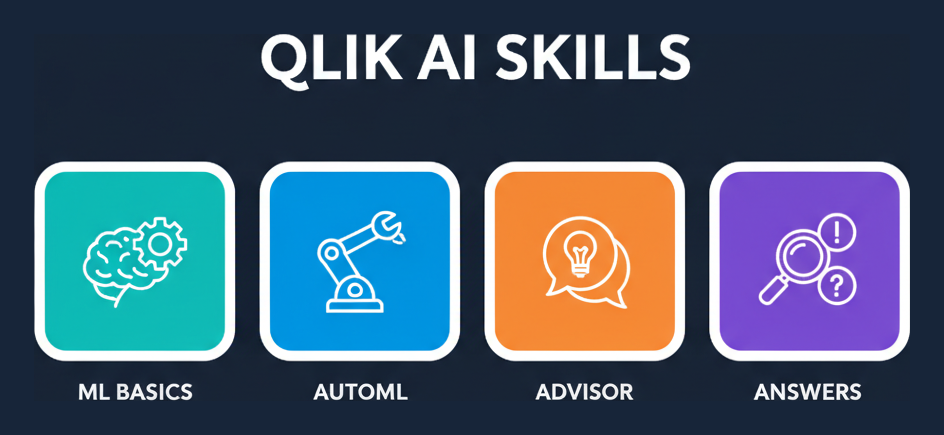
Focus your study on distinctions that trip people up. Know how generative AI differs from traditional machine learning, what a large language model does versus a classic predictive model, and where natural language processing sits in the wider AI landscape.
Core Concepts Worth Memorizing
- Subsets of AI, including generative AI and machine learning
- How natural language processing enables human-to-AI interaction
- What large language models are and how they generate responses
- Common terminology such as training data, inference, and prompts
How Does QAIS Test Business Applications of AI?
The Business Applications for Artificial Intelligence domain also carries 30% and shifts from theory to judgment. QAIS asks you to identify appropriate use cases for generative AI and machine learning, recognize the LLM application project lifecycle, and evaluate how production LLM apps are improved through better data pipelines and reduced latency. Governance, ethics, and AI limitations sit squarely inside this domain too.
Expect scenario questions where a business goal is described and you must decide whether AI fits, which approach suits it, and what risks apply. Data quality underpins every one of these decisions, and strengthening those skills through a data quality certification complements the governance topics tested here.
What This Domain Expects You to Assess
- Suitable use cases for generative AI versus machine learning
- The stages of the LLM application project lifecycle
- Practical ways to reduce latency and adapt data pipelines
- Data governance, security practices, and ethical considerations
- The limitations of AI and common data challenges in generative AI projects
What Are Qlik Answers and Qlik AutoML?
Qlik Answers and Qlik AutoML are two product domains that together carry 30% of the QAIS exam. Qlik Answers is Qlik’s generative AI assistant that surfaces answers from unstructured content, while Qlik AutoML lets analysts build and apply machine learning models without heavy coding. You must know each product’s typical workflow, key terms, and best-fit use cases.
For Qlik Answers, the exam stresses the standard workflow and concepts like retrieval augmented generation, which grounds AI responses in your own documents. Reviewing the official Qlik Answers assistant overview clarifies how the product turns content into trustworthy answers.
Qlik AutoML Essentials
For the machine learning domain, understand the AutoML foundations, the correct application of the AutoML workflow, and where automated modeling genuinely helps. The vendor’s Qlik AutoML documentation is the cleanest reference for the training, testing, and deployment steps you should be able to describe.
How Does Insight Advisor Fit the Exam?
Insight Advisor is the smallest QAIS domain at 10%, yet it rewards easy marks if you know the product. The exam expects you to generate insights using Insight Advisor and apply best practices when interacting with it, especially effective prompt generation. This domain connects natural language querying to the augmented analytics experience inside Qlik Sense.
Because Insight Advisor uses conversational and search-driven exploration, practice phrasing clear prompts and interpreting the suggestions it returns. Hands-on time in a Qlik Sense environment makes these questions straightforward. The official Insight Advisor guidance shows how the tool turns questions into visualizations you can validate quickly.
How Should You Prepare for the QAIS Exam?
Effective QAIS preparation blends concept study with hands-on Qlik Cloud practice. Because 60% of the exam covers AI fundamentals and business applications, start there, then layer in product-specific skills for Qlik Answers, Qlik AutoML, and Insight Advisor. A structured four-week plan keeps momentum without cramming and leaves room for timed practice near the end.
Follow a sequence that matches the syllabus weighting:
- Build your AI vocabulary and study generative AI, machine learning, NLP, and LLM concepts.
- Work through business use cases, the LLM app lifecycle, governance, and AI limitations.
- Practice Qlik AutoML end to end, from data upload to model deployment.
- Explore Qlik Answers and prompt Insight Advisor inside a live Qlik Sense app.
- Sit timed practice questions and review every incorrect answer for the underlying concept.
Analysts who pass often note that hands-on repetition inside Qlik Cloud mattered more than passive reading, since the exam rewards applied judgment over memorized definitions.
What Career Doors Does a Qlik AI Specialist Open?
Earning the Qlik AI Specialist credential signals that you can bridge analytics and applied AI, a combination employers increasingly seek. It strengthens your standing for roles such as AI analyst, BI developer, analytics consultant, and data solution architect, especially in organizations already invested in the Qlik platform. The certification also pairs well with broader Qlik Sense expertise.
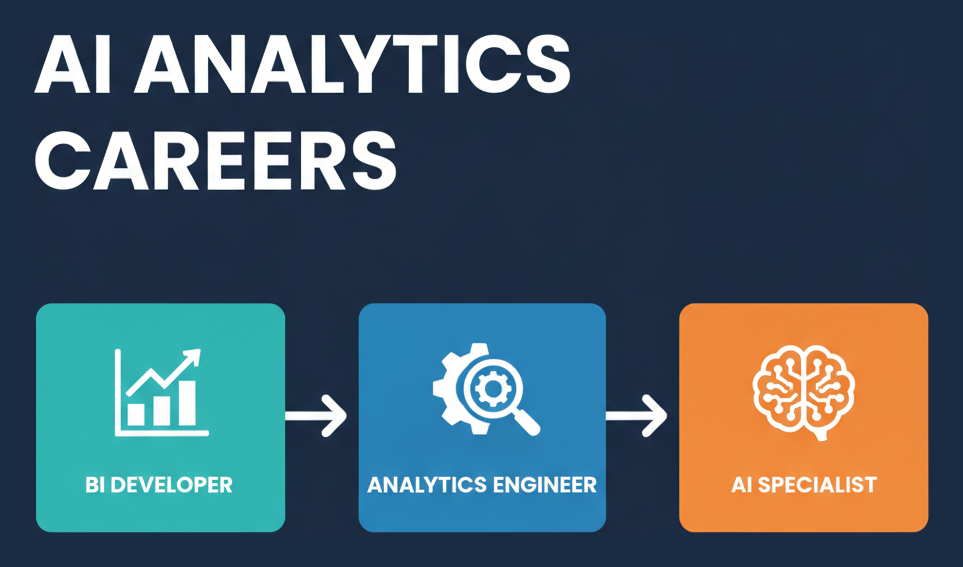
Professionals who add this specialization often widen their remit from dashboards to AI-assisted decision support. If your foundation is dashboard design and reporting, extending it with a Qlik Sense business analyst track alongside QAIS builds a well-rounded analytics profile that spans both visualization and augmented intelligence.
Roles That Value QAIS Skills
- AI-focused business and BI analysts
- Qlik developers and platform consultants
- Analytics engineers adopting AutoML workflows
- Solution architects designing AI-enabled analytics
Frequently Asked Questions
What is the Qlik AI Specialist certification?
It is Qlik’s specialist credential, coded QAIS, that validates your ability to apply generative AI and machine learning within the Qlik platform. It covers AI fundamentals, business use cases, Qlik Answers, Qlik AutoML, and Insight Advisor across practical analytics scenarios.
How many questions are on the QAIS exam?
The QAIS exam contains 50 questions and runs for 120 minutes. You have just over two minutes per question on average, so timed practice helps you keep a steady pace and finish comfortably without rushing the final items.
What score do you need to pass QAIS?
You need a passing score of 73% to earn the Qlik AI Specialist certification. Because the exam blends concept recall with applied judgment, review every practice mistake to close knowledge gaps before you book your test date.
How much does the QAIS exam cost?
The Qlik AI Specialist exam costs $250 USD. Factor in preparation time and hands-on Qlik Cloud practice when planning your investment, since applied familiarity with the products often makes the difference between passing and falling short.
Which syllabus domain carries the most weight?
Two domains tie for the most weight at 30% each: Introduction to Artificial Intelligence and Business Applications for Artificial Intelligence. Together they make up 60% of the exam, so AI concepts and use-case judgment deserve the largest share of your study time.
Do you need coding skills to pass QAIS?
No heavy coding is required. Qlik AutoML enables model building without extensive programming, and the exam emphasizes concepts, workflows, and appropriate use cases. A clear grasp of the machine learning process matters more than writing algorithms by hand.
Is Qlik AutoML tested on the exam?
Yes. The Fundamentals of Qlik Machine Learning domain carries 15% and covers Qlik AutoML foundations, the correct application of its workflow, and suitable use cases. Practicing a full AutoML project inside Qlik Cloud prepares you well for these questions.
What is Qlik Answers in the QAIS syllabus?
Qlik Answers is a generative AI assistant that surfaces grounded responses from unstructured content using retrieval augmented generation. The exam expects you to outline its typical workflow, recognize key terms, and evaluate where the product fits real business needs.
Who should take the Qlik AI Specialist exam?
Business analysts, Qlik developers, BI professionals, and solution architects who work with the Qlik platform benefit most. The credential suits people who already handle data and now want to apply AI capabilities confidently within their analytics projects.
How long should you study for QAIS?
Most candidates prepare over three to four weeks, balancing concept study with hands-on Qlik Cloud practice. Align your schedule to the syllabus weighting, spending the most time on AI fundamentals and business applications, then finishing with timed practice questions.
Final Thoughts on Earning QAIS
The Qlik AI Specialist certification rewards analysts who can connect AI concepts to genuine business outcomes on the Qlik platform. With five weighted domains, a 50-question exam, and a 73% passing bar, success comes from matching your study to the syllabus and practicing inside Qlik Cloud rather than memorizing definitions. Focus first on AI fundamentals and business applications, then sharpen your command of Qlik Answers, Qlik AutoML, and Insight Advisor. When you are ready to test your readiness, work through a full set of realistic sample questions and review each answer until the reasoning is second nature. That disciplined, hands-on approach is what turns preparation into a confident pass.


